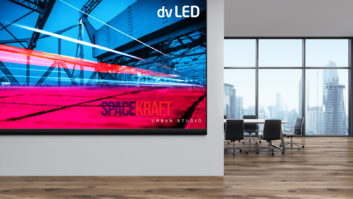
For many years, the conversation around Direct View LED (dvLED) was all about the spectacle, frequently pivoting around terms such as ‘pixel pitch’, ‘brightness’ and ‘scale’. In the case of large-scale installations – such as those in corporate facilities or shopping malls – this made a great deal of sense as visual impact was so frequently the chief priority.
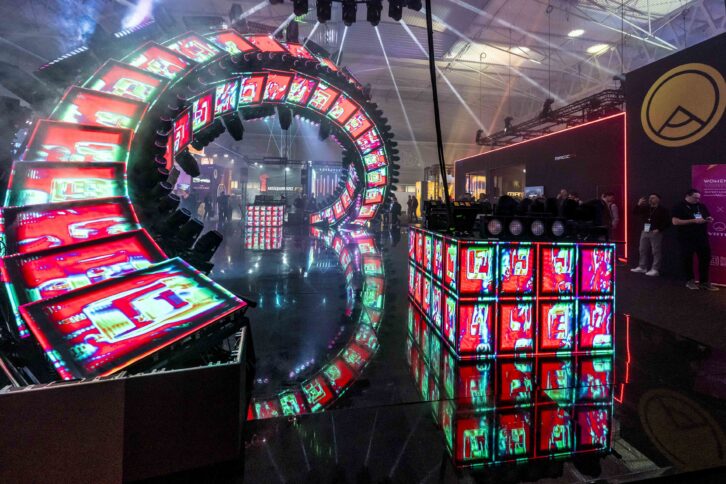
But in terms of engendering wider adoption, including for more quotidian deployments, this approach only told part of the story. Talking to end users over the years, there were frequently-voiced concerns about installation practicalities, ease of use and long-term maintenance – issues that the industry was arguably a little slow to address en masse.
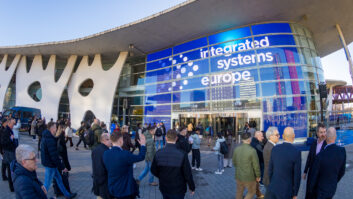
In which context the sea-change evident at ISE 2026 is all the more striking. Overwhelmingly, manufacturers chose to talk about how they were making their LED systems easier to install, integrate and service – and, as a result, less expensive to implement. There was also a repeated emphasis on reducing complexity with regard to system architectures as part of a shift towards more routine deployments.
Moreover, from new tools that greatly simplify specification to All-in-One (AiO) LED solutions that can be implemented quickly and relatively cheaply, it was clear that there was substance to back up this revised messaging. In this article we’ll look at some of the key findings that came out of this milestone ISE for DVLED, and consider how the sector might develop over the next few years.
MARKET MOMENTUM
Before delving into the specifics, it’s important to note that the reworked narrative surrounding LED displays has contributed to renewed market momentum after a period of stagnation. According to Futuresource Consulting, which last year noted that AiO values are projected to increase at a 42 percent CAGR to reach $1.5bn by 2029, pre-configured solutions are reaching new channels and customers by simplifying installation, lowering integration costs, and minimising technical obstacles to adoption.
Packageless LED manufacturing methods, including Chip on Board (CoB) and Chip on Glass (CoG) are spurring a “technology transition and anticipated strategic inflection point,” according to Futuresource principal consultant, commercial and consumer display technologies, Ted Romanowitz. This could be observed at ISE by the high number of ODMs (original design manufacturers) partnering with leading pro AV brands.
Other factors behind the re-energised LED market include increasing pixel density (sub-1mm) – supporting close-up viewing and smaller dimensional sizes for Full HD and 4K UHD installations – as well as “significant price erosion” due to packageless technologies reducing the price premium of LED versus flat-panel display and interactive flat-panel display.
MichielTon.com
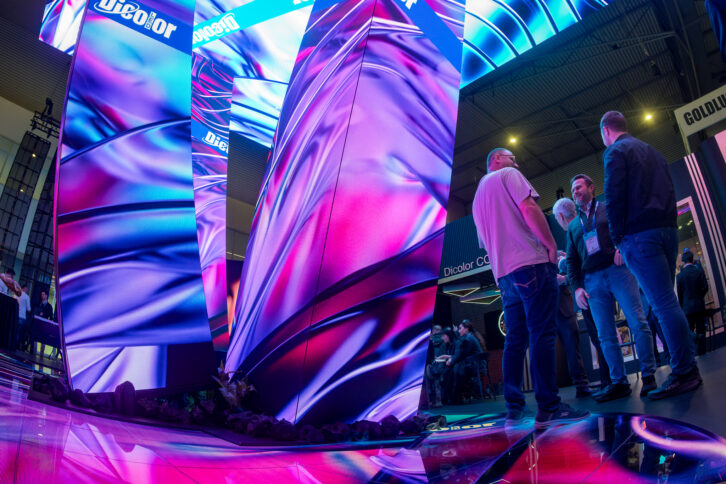
The advent of tools which allow customers to visualise their LED installations down to the finest details – thereby reducing the risk of dissatisfaction post-completion – are also making the technology more accessible. For example, the Philips LED Configurator allows partners and customers to choose from PPDS’ full suite of indoor and outdoor Philips dvLED panels, factoring in their own needs for a project such as size, pixel pitch, brightness and refresh rates. PPDS has also collaborated with leading AV component manufacturers – such as producers of brackets, mounts, cables, sensors and more – so customers can specify a full range of components as part of the design process.
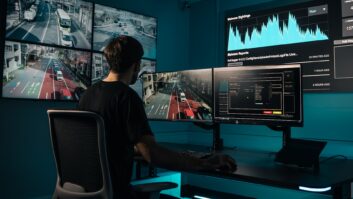
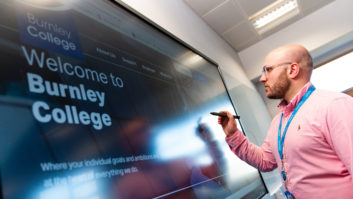
Market segment-wise, control rooms, transportation, corporate and universities are the environments where LED adoption is currently the most buoyant. Romanowitz adds: “The long-term outlook is optimistic as LED deployments expand from large spectacular displays to broad adoption across corporate and education campuses – from ‘street to seat’ in stadiums and venues, and ‘curb to cabin’ in transportation hubs.”
REDUCED COMPLEXITY
There is a general consensus about the factors that have tended to render LED solutions difficult to deploy in the past – and which manufacturers therefore feel compelled to address as the technology moves into a more mature phase. They include complex system design, tight tolerances and time-consuming installation processes – not to mention additional (and sometimes unanticipated) costs.
“Historically, dvLED installation has been challenging due to the precision required,” observes Vanessa Lovric, European product marketing manager, Panasonic. “Manual module alignment, combined with the fragility of LED pixels, made installation both time-consuming and costly. As a result, projects often required highly specialised installers. In addition, dvLED systems were traditionally expensive – particularly at lower pixel pitches – and frequently required custom mounting structures and external processing hardware, further increasing complexity.”

The fact that manufacturers tended to produce often strikingly different designs wasn’t exactly conducive to more widespread adoption either, as this demanded a degree of upskilling to install each system. Electrical and structural conditions in any given site also introduced challenges, especially if new cabling or supporting structures had to be undertaken prior to installation. Moreover, for larger dvLED walls, it has often been necessary to fabricate custom mounting solutions – adding further to project timescales and expenses.
It is therefore no surprise that AoI systems – which, as their name would suggest, integrate the key components into a single solution – are now proving to be such a fast-growing part of the business. Satbir Panesar, LED product marketing manager at Sony Professional Displays and Solutions, comments: “The introduction of all-in-one dvLED solutions is one of the most effective responses to these challenges. Lower brightness requirements mean lower power consumption, and pre-built packages with internal cabling and processing dramatically reduce installation time.”
PRODUCT PROCUREMENT
It’s also worth noting that AiO systems are increasingly available in most frequently specified sizes – approximately 108 to 165in. Consequently, they can be approached more as standard product procurements as opposed to bespoke investments. “For integrators, that combination of factors makes dvLED a far more viable and commercially attractive proposition than it was even a few years ago,” says Panesar.
With pre-installed and pre-configured AiO solutions, there is no longer a requirement for complex alignment and manual calibration. This spells a reduced need for high-level skills and, from an integrator perspective, less time required for installation – and therefore a lower cost-base. The use of very robust technologies, reducing the need for specialist handling, tends to be another feature of AoI solutions. “Compared to traditional DVLED deployments – which were highly technical and labour-intensive – AiO solutions make installation faster, more predictable and more cost-effective,” says Lovric.
AiO systems also bring more commercially-oriented benefits, eschewing the need for exhaustive quotations involving multiple components that are associated with some traditional LED projects in favour of clearer pricing. Dean Tsai, general manager of pro AV solutions business unit at ViewSonic, remarks: “This enables integrators to scale more efficiently, improve project profitability, and opens up greater opportunities for IT channel partners by reducing the need for upfront inventory planning.”
Indeed, the whole risk factor can be greatly decreased. “With AiO, different manufacturers have been working on their own timelines, of course,” notes Shane Dunn, marketing director at dvLED and digital signage specialist Direct View Solutions. “But absolutely, they’re starting to kind of dominate the market and for very good reason, not least their ability to take away the risk element from the design perspective.”
However, there is an important caveat to be borne in mind here. AiO solutions will not be the most appropriate for every project; as INFiLED EMEA product lead Pedro Lopez Prada notes: “For more customised or complex projects, traditional LED systems are the best solution.”
SERVICE ACCESS

As part of this drive towards greater accessibility, there has also been an increased focus on ease of service and maintenance. “Even with reduced maintenance needs, quick and easy access is essential to minimise downtime and avoid disruption to operations,” says Prada.
Tsai remarks: “Service access is critical in long-term LED installations, particularly as dvLED is often deployed in high-visibility environments such as storefronts, corporate lobbies, control rooms and public venues, where it plays a key role in visual communication.”
That said, there is an important distinction to be made between different designs of products. Where a system is only ‘rear-serviceable’, sufficient clearance and access must be ensured from the beginning of the deployment. On the other hand, ‘front-serviceable’ designs offer greater flexibility, especially in more problematic or spatially constrained environments.
Erik Indresøvde is consultancy supervisor at AV integrator Kinly. “Service access is very important as it directly impacts uptime, maintenance efficiency, and the total cost of ownership over the life of the display,” he says. “Whether a system needs front or rear access must be considered early as it affects how easily issues can be resolved and how practical the installation will be to support in the long-term. That said, this is an area where the market has improved significantly. Many leading manufacturers now offer much better serviceability, with AiO] systems often incorporating front access as standard.”
REDUCED MAINTENANCE
Equally important are various innovations that reduce maintenance needs – especially as LED systems become more prevalent in, for example, corporate and education environments, where downtime has to be kept to an absolute minimum. Examples here include real-time thermal correction and compensation, which allows colour accuracy to be preserved throughout the display’s lifetime without recourse to manual intervention.
The use of newer technologies, such as the aforementioned CoB, is also making displays more solid – and leading to fewer call-outs. Additionally, there is a continuing trend towards scheduled service plans that can obviously lower the likelihood of emergency maintenance being required.
But as many vendors now observe, service access and ease of maintenance are only part of a growing roster of expectations. For instance, with energy costs rising once more – not least due to the dramatic energy security challenges raised by the current conflicts in the Middle East and between Russia and Ukraine – many organisations are placing extra emphasis on power consumption as part of overall operational expenses, as well as within the context of their energy efficiency strategies.
Then, in markets such as corporate where extensive LED estates may need to be managed in a centralised manner, there is also the burgeoning need for remote access and control. Indresøvde confirms: “As installations become more business-critical, there is also growing emphasis on monitoring and management, ensuring issues can be identified quickly and, where possible, resolved remotely.”
MAINSTREAM CROSSOVER
As evidenced at ISE 2026, there is now a universal confidence about the ability of LED to achieve traction in other market segments. It’s already a prime mover in the corporate world, but we can expect it to cross over more from public-facing spaces, such as lobbies and showrooms, into boardrooms, meeting spaces and more. Multiple vendors also cite growing demand from educational centres, R&D facilities, design studios, and film production operations that are using LED as part of virtual production infrastructures (colour accuracy being especially critical for VP).
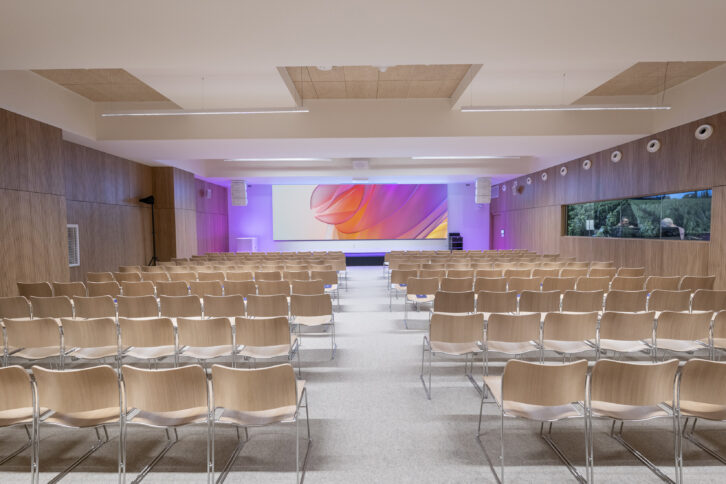
Residential is also on the rise, notes Panesar: “The sector I would highlight as one to watch for the rest of 2026 is residential — specifically home cinema. dvLED has become considerably more affordable in recent years, and as that trend continues, we expect to see meaningful uptake in the high-end home entertainment market.”
The versatile qualities of LED will also come further to the fore, indicates Ben Chessum, co-founder of Direct View Solutions. Noting the trend towards consultants designing rooms around LED, he points to increasingly innovative deployments like LED-lined stairwells on cruise ships. “It’s such a manipulable product that it’s almost getting to the point where it’s down to the imagination of where we can take it,” he says.
For all of the above reasons, it’s also clear that LED and LCD video walls are increasingly perceived as having achieved parity – with the modularity of LED walls proving increasingly attractive for large deployments as panels and internal components allow individual replacement, and downtime can be minimised as much as possible. As Panesar observes, “the LED versus LCD conversation is very much advancing, and it will only intensify – particularly when large screen sizes are a consideration.”
After a few years in which progress felt a little muted, ISE 2026 confirmed that DVLED is on a steeper upward trajectory once again. Aided by multiple technical innovations and clearer messaging around installation, service and maintenance, the technology is no longer the preserve of flagship spaces where cost is a lesser concern. While those environments will continue to be important – not least for showing the full scope of what LED can deliver – it will be the more day-to-day business, education and retail applications that drive the technology’s next phase: complete crossover into the mainstream.
You can subscribe to Installation magazine for free here and the daily newsletter here.