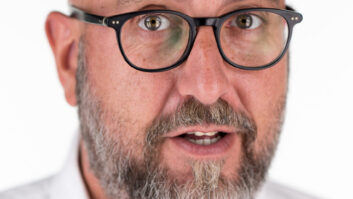
Brad Hintze’s love for Utah shines through when he talks about skiing in the magnificent Wasatch peaks just 40 minutes from his home. The powder snow is the best on Earth, he insists. He recalls watching a nine-year-old boy hurtle down a slope screaming with joy, then deliberately plough into two feet of fresh snow, and it’s clear he’s really talking about himself. As Crestron’s EVP of global customer success and marketing, he has technology and sales on his mind all day, so escaping into nature to unwind is a must.
“I grew up near Salt Lake City and I love the proximity of the great outdoors,” he says. “We try to go skiing every weekend in winter. In Utah, it’s drier, more powdery snow which means it’s like water skiing. The sensation is so exhilarating and so much fun that you can’t help but giggle out loud!”
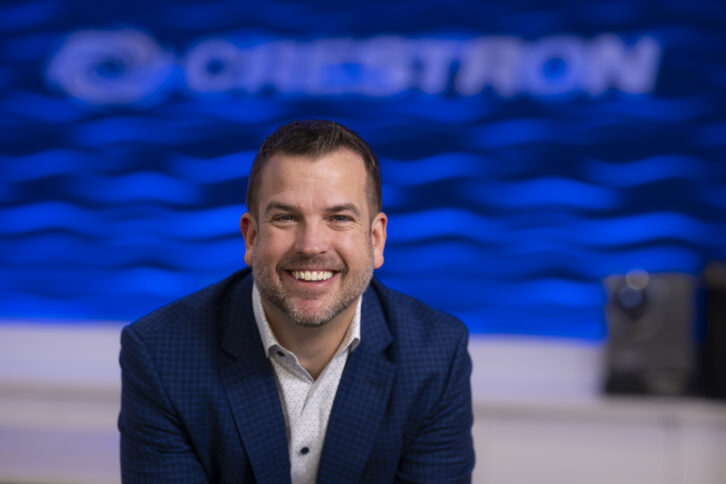 Utah has shaped every aspect of Hintze’s life and career. He’s risen to a senior role at Crestron despite not moving outside the state. While some see Utah as a conservative backwater, it’s home to Silicon Slopes, one of the fastest-growing US tech corridors, with companies such as Adobe and over 1,200 tech firms clustered nearby. So he’s never lacked for opportunities.
Hintze grew up in Delta, a small farming town a couple of hours south of Salt Lake City, in a tight-knit community of The Church of Jesus Christ of Latter-day Saints, commonly known as the Mormons. The eldest of five boys, his father was a mechanical engineer. While his early life was affectionate and structured, Hintze admits he never quite felt at home. “It was a lovely experience to be part of that community. It gave me a lot of opportunities to try different things, get into music and get into theatre. But my father called me the ‘California Kid’ as I never quite fitted in with the cowboy crowd. I was out of there as soon as I graduated. But I still go back frequently,” he says.
Hintze’s first job provided a lifelong lesson in customer service. In 2002, he began working in sales at Totally Awesome Computers in Salt Lake City. Over three years, he gradually earned trust and helped oversee a company with 10 retail locations and $30m in revenue. His boss’s radical approach – offering free customer service, including fixing any machine – left a lasting impression. “The CEO was a large personality, full of crazy antics. But he understood the value of public service.”
EXPANDED NETWORK
From there, Hintze moved into Utah’s startup scene, taking a role at software developer Bungee Labs in 2005 as director of product marketing. The experience gave him insight into the entrepreneurial mindset and the importance of enabling other professionals to build things. He also spent time in Silicon Valley, working with Yahoo, eBay, and Salesforce. These experiences exposed him to large-scale enterprise technology deployment. “Along that journey, I worked closely with the CEO of Control4. About ten years after that experience, he brought me into the business. And that’s how I got into this industry,” Hintze says.
Joining Control4 in 2014 as senior director of product marketing, Hintze spent nearly five years driving its smart home business to $300m. After the Snap One merger, he was recruited by Randy Klein, president and CEO of Crestron, to take on marketing responsibilities. “He’d heard about the work I did at Control4,” Hintze says. “I’ve been fortunate to get pulled into different roles along the way. And it’s been a wild ride ever since.”
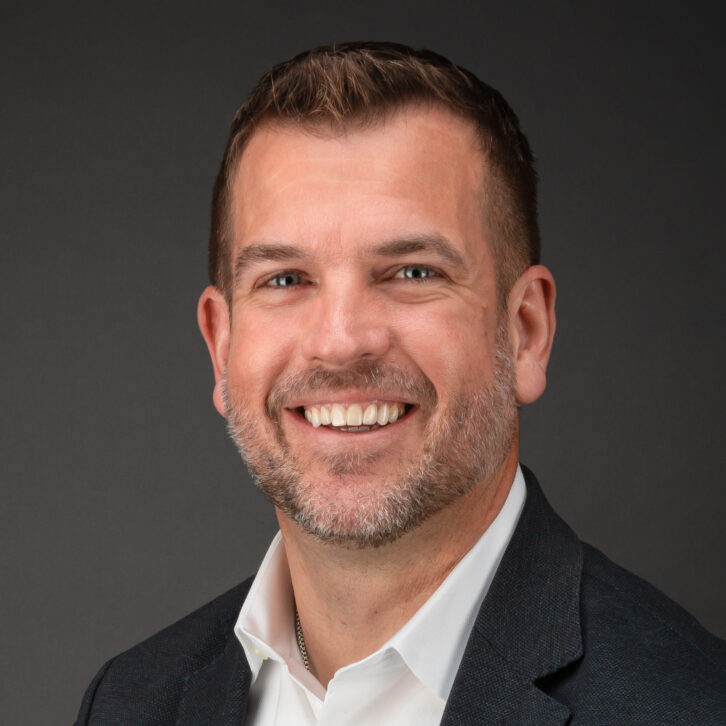 Taking over, intitially, as EVP of global marketing at Crestron at the end of 2020 represented a significant leap. While Control4 focused primarily on residential applications, Crestron’s remit was broader. Founded in 1971 as a residential control systems manufacturer, the company has steadily expanded into video conferencing, intelligent cameras, and unified communications.
Hintze’s role sits at the intersection of product development and sales. “Marketing, historically, sits at that intersection, where you can provide strategic input around go-to-market strategy and execute that by partnering closely on the product development side,” he explains. “And here at Crestron, that extends to whole new commercial product categories.”
Since December, he’s also been responsible for customer experience – all non-sales customer-facing activity, from order processing and technical support to professional services and training. “It’s certainly a lot to take on, but it’s very interesting and engaging. I learned early in my career about the value of great customer service – and now I have an opportunity to contribute to the business in a strategic way,” he says.
Hintze has to stay attuned to the “defining characteristic” of the industry today – complexity. A decade ago, Crestron was fighting to convince people of the value of its technology. That battle has been won. Now it’s about scaling up. “Customers walk in with high expectations of how a meeting should run,” says Hintze. “They demand a killer experience. It used to be that you’d help them deploy two or three boardrooms. Now you have to help them deploy 5,000 conference rooms, each with cameras, touchscreens, the lot. The scale is huge.”
A key factor enabling Crestron to operate at scale is its manufacturing model. Unlike many competitors, a significant proportion of products are built in-house at Orangeburg, New York, before scaling production to Mexico. “There’s no other manufacturer in our industry doing what we’re doing. Actually, Sennheiser is an exception as their factory is truly impressive. But at Crestron, we’re not turning it over to some random OEM. We’re doing it ourselves.”
Looking ahead, Hintze predicts the disappearance of enterprise video (EV) as a standalone category. AI, he argues, is accelerating the integration into a broader AV/IT ecosystem. “It used to be that you’d hang a screen and drop an HDMI cable down. That’s not the case any more. AI is going to drive the ubiquity of our technology – not just for Crestron, but our whole industry and skill set. This is also connected to the scale it needs to be deployed at. You’ll need eyes and ears everywhere. That means cameras, microphones, speakers, and control in every space. So it will evolve to become a well-integrated part of the infrastructure of every space and experience.”
Hintze almost didn’t end up in technology at all. He originally planned to be a music educator, playing piano and clarinet, before figuring out that it wouldn’t support the lifestyle he wanted. He still plays piano, and listens obsessively to Chopin’s nocturnes on long flights. “And my mother also instilled in me a love of Dvořák. It’s just spectacular. And I also love Gershwin. Absolutely American music,” he adds.
Cooking is another passion, shaped by a two-year mission in Thailand for the Mormon church. Hintze left Utah, learned Thai and fell in love with the cuisine. He has since polished his Thai repertoire, notably a green papaya salad. But his current obsession is crispy fried chickpeas over Greek yogurt. “I’ve finally perfected how to get the outside of the chickpea crispy enough,” he says.
Family remains central. Hintze has four children: Samantha, 26, who works as a social worker with young children with autism; Braden, 24, who is heading into technology; Ethan, 21, studying computer science and playing clarinet in his university’s Wind Symphony; and Jacob, 18, training to be an electrician. Despite a global role, he remains deeply involved in their lives. The evening of our interview, he was heading out to watch Ethan perform – one of the last concerts of his final year. “It’s sad. We won’t be able to do this much longer,” he says.
ALTERNATIVE PATHWAY
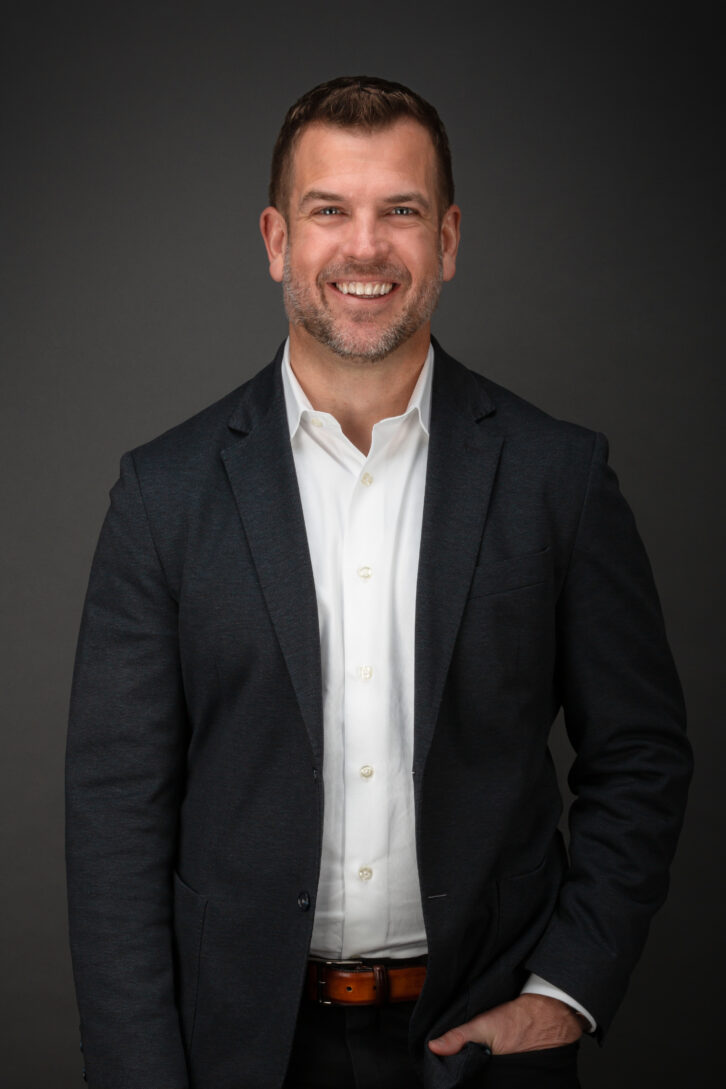 Hintze has been with his husband Ryan for almost 16 years. He was previously married to his children’s mother, and has maintained a great relationship with her. But he came to understand that the traditional Mormon path wasn’t right for him. “After I returned from Thailand, I got married straight away, as is the typical Mormon approach. But then later I realised it just wasn’t working and I stepped away,” he says. “And it was quite an experience. It’s tightknit, and the beliefs are family-centric and conditional. If you have children that are not fully believing and fully practicing, you’re not promised to be with them forever.”
The church’s hardline position on same-sex relationships was the biggest issue. Both sides of Hintze and his husband’s family are Mormon, and building understanding took time and effort, especially in the early years. Ryan plays in a community orchestra, and the couple always cooked dinner for his family before concerts. “It was a great opportunity for them to see what our life is really like and to get to know our children. So, while they’re still practising Mormons, they’re accepting and supportive as well. But it took time to get there,” explains Hintze.
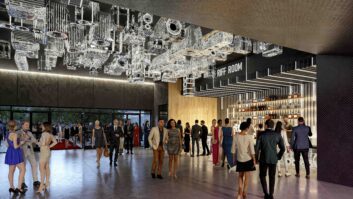
Those roots in Utah remain central to his life. In winter the ski slopes beckon and in summer he and Ryan hike in the peaks. Hintze’s kids all live nearby and it’s pleasing to him that they recognise how cool his job is. “They’ve naturally gone that way. Whether it’s a restaurant or at their university, they’re always looking for the tech. At Crestron, we enable people to collaborate and get jobs done. We build incredible experiences in stadiums like Barcelona’s Spotify Camp, or education spaces, or people’s homes. There’s almost no walk of life we can’t have an impact on. When you explain, people think it’s cool. I could have ended up in boring enterprise software. But if you told people at a party that you worked at SAP, would they have the same reaction?”
You can subscribe to Installation magazine for free here and the daily newsletter here.