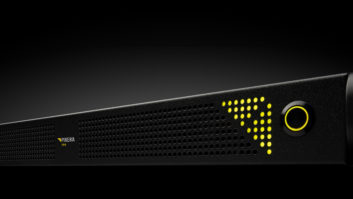
AV Stumpfl PIXERA media servers, SNA Displays LED video walls and Christie projection systems form the visual backbone of the newly opened Montana Heritage Center in Helena, Montana, United States.
Integrated by Electrosonic, the technology ecosystem was engineered to create interactive exhibition spaces where video, multichannel spatial audio and architectural lighting respond to visitor presence rather than following pre-set schedules. Multiple AV Stumpfl PIXERA playback servers operate synchronised via timecode, genlock and framelock to drive visual media across the facility.
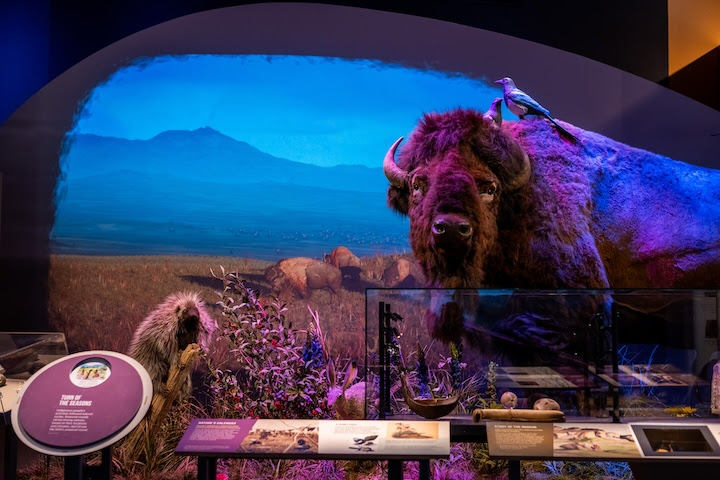
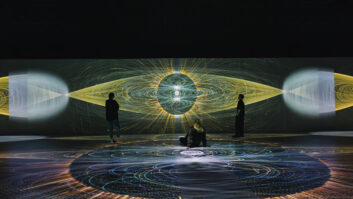
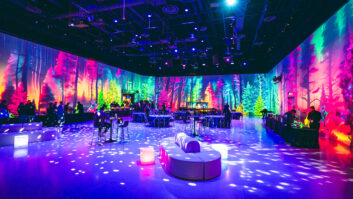
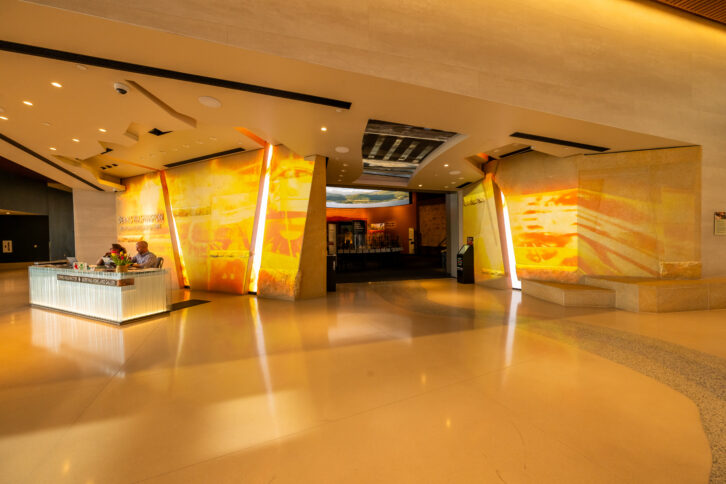
Visual surfaces throughout the galleries combine custom SNA Displays LED installations and Christie projectors. PIXERA manages real-time content mapping across non-standard display geometries, handling edge blending, warping and masking across projection surfaces alongside irregular LED structures that include a sweeping curved wall in the Making Montana gallery, a triangular LED wall in the Tribes Today exhibit, LED pillars and a luminous ceiling.
Exhibits across the museum respond directly to visitor movement. Inside a recreated mineshaft, SNA Displays multi-surface LED walls combine with Christie projection, directional soundscapes and low-frequency tactile transducers to simulate a shaking floor triggered as visitors enter. Elsewhere, motion sensors trigger projected tribal origin stories inside a traditional tipi structure, while touchpoints on a classic vehicle activate localised audio and synchronised open-road projections.
The media server network integrates directly with a Q-SYS audio architecture and the museum’s central show control system, translating real-time sensor inputs into coordinated multi-disciplinary media cues. The scalable framework allows the institution to refresh digital media and reconfigure rotating exhibition galleries without requiring changes to the underlying hardware infrastructure.
Nikhil George, senior project manager at Electrosonic, said: “What makes a building like this complex is not any single exhibit. It’s that so many of them are triggered rather than scheduled. Visual playback, audio and lighting all have to land together on a cue that a visitor generated by walking into a space. And they have to do it the same way on the last showing of the day as they do during the first.”
You can subscribe to Installation magazine for free here and the daily newsletter here.