Panasonic projection technology and AV Stumpfl’s PIXERA media server software are combining to deliver an immersive projection system at Signal Space, a digital art gallery in Prague. Nineteen Panasonic 4K laser projectors cover the walls and floor of the venue’s main hall, with Virtuality.one PixelBox media servers running PIXERA to coordinate the outputs as a single canvas. The system operates at 3,840 x 2,400 per output, at 60 frames per second and 10-bit 4:4:4.
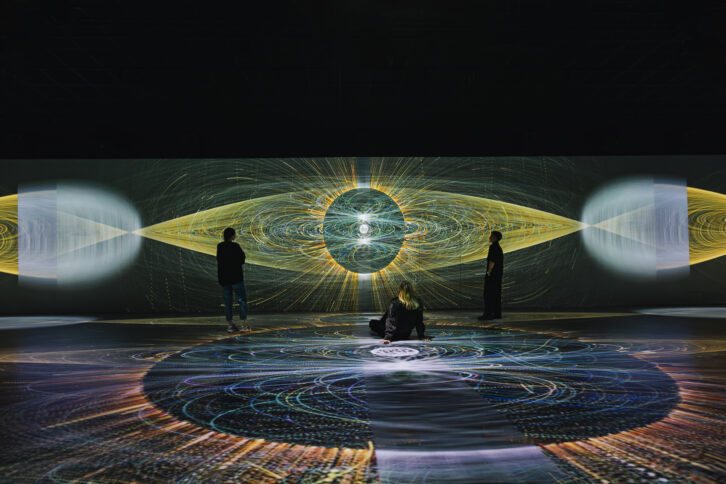
Signal Space opened inside Prague’s heritage-protected Old Town Market Hall. The 2,500sq m venue is the year-round successor to the city’s Signal Festival, which has run since 2013. Its main immersive hall covers around 300sq m and hosts digital art alongside performances, events and conferences, requiring the projection system to support both pre-produced content and live inputs.
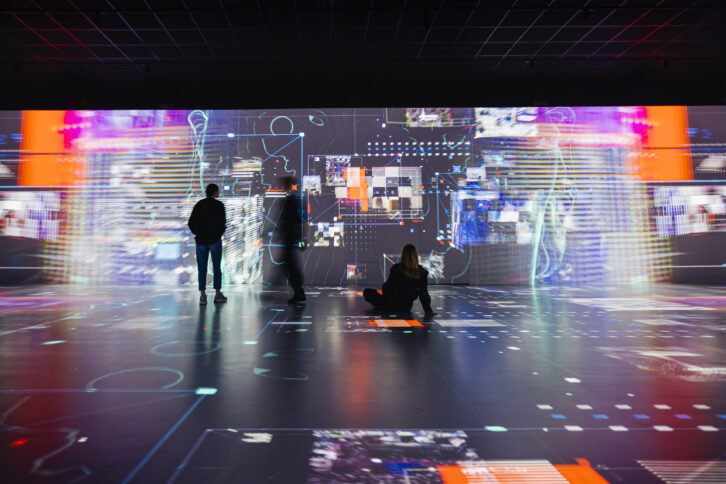
The building’s architecture presented a particular challenge. Completed in 1896, the market hall has a floor that slopes by around 25cm from one side to the other, while uneven concrete makes the projection surface irregular. The ultra-short-throw lenses also introduce barrel distortion, complicating alignment across the floor and walls. Panasonic’s camera-based automatic calibration system, using networked cameras mounted on the projector truss, aligned the wall projections but could not complete the floor mapping.
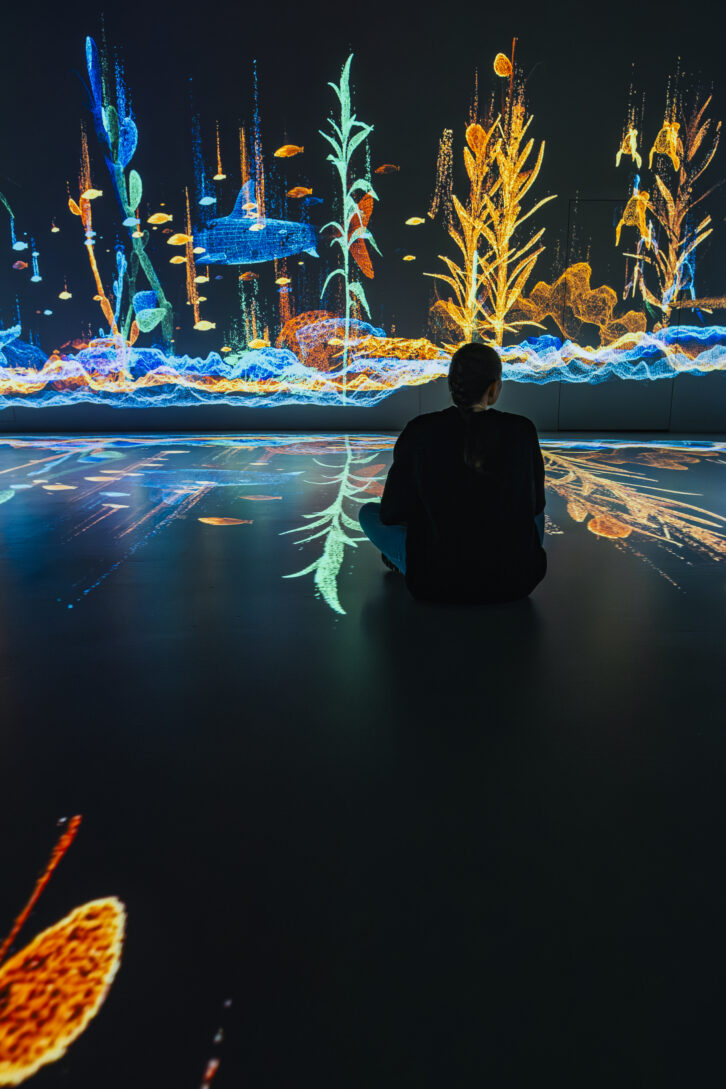
The same PIXERA system also routes surround audio over Dante, keeping video playback and audio within a single software workflow. The venue can accommodate live content over SDI and NDI, including picture-in-picture graphics, although processing more than 170 megapixels while playing 10-bit video and capturing SDI places significant demands on the current hardware. Software-only licensing also allowed Virtuality.one to specify media servers around the project’s requirements and budget.
David Houžvička, chief technology officer at Virtuality.one, said: “PIXERA’s warping tools were used to correct the remaining geometric distortions and achieve accurate alignment at the joins between surfaces. We recommended PIXERA mainly for its reliability and its 3D mapping.”
He added that the software’s clustering made it straightforward to configure systems with multiple outputs, keeping all 19 projectors synchronised. Hardware framelock and genlock maintain a common timing reference to prevent tearing at projector joins.
You can subscribe to Installation magazine for free here and the daily newsletter here.