For AV manufacturers, sustainability is not just about doing the right thing for ethical, or environmental reasons. It is becoming a commercial imperative. Buyers increasingly want more efficient, low-energy, greener products, even if they cost more. Meanwhile, legislation is ramping up pressure on everyone to reduce carbon. And that includes manufacturers, purchasers and specifiers.
Companies increasingly recognise that investments in sustainable technologies and practices serve a dual purpose, according to Kateryna Dubrova, senior market analyst, connectivity and services, Futuresource Consulting. She says: “They align with environmental responsibilities while also driving economic benefits, contributing significantly to the bottom line. This realisation is reshaping the industry’s approach to sustainability, underscoring a symbiotic relationship between ecological stewardship and financial performance.”
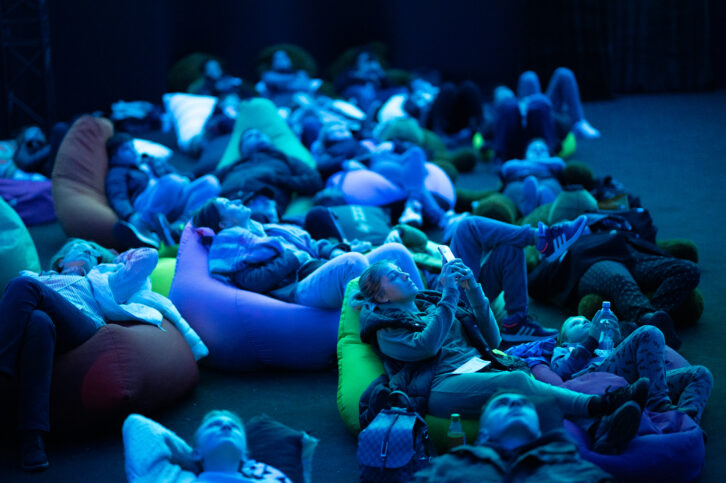
A primary economic driver behind adopting sustainable practices in the pro AV industry is cost reduction, Dubrova adds. Energy-efficient technologies, such as LED lighting and advanced video walls, directly decrease operational expenses. For example, installing a 27m x 4m video wall in a studio not only enhances production efficiency, but also leads to substantial savings in operating costs. “The investment streamlines production workflows, enables quicker turnaround times, and reduces the need for extensive lighting and staging crews, demonstrating the economic viability of sustainable investments,” she argues.
Beyond direct cost savings, sustainable practices also enhance brand equity. Today’s consumers are increasingly attracted to brands that demonstrate a commitment to environmental responsibility, adds Dubrova. “The use of innovative, sustainable technologies not only improves production quality but also strengthens the brand’s appeal to a broader audience. This enhanced brand perception can lead to increased engagement and higher commercial revenue, highlighting the interconnected nature of sustainability and market competitiveness.”
The manufacturers agree. Rik Willemse, head of Sony professional display and solutions Europe, comments: “Sustainability is not a novelty or passing fad. It’s a necessary, permanent addition to what is needed to flourish. Clearly there is pressure on businesses to be more sustainable from both consumers and regulators. Sustainability is a growing priority among consumers, so specifiers that continue with unsustainable practices will struggle to maintain a loyal customer base and may be criticised by regulators.”
SUSTAINABILITY SURVEY
Confirmation of the industry’s changing attitudes came from a recent Sony survey of 1,000 European AV professionals. It found eight in 10 businesses were willing to pay over 20 percent extra for more sustainable AV products. Meanwhile, a third were willing to pay more than 50 percent extra and around 84 percent said a provider’s sustainability practices were important when choosing an AV partner.
Various sectors now have sustainability codes of practice which dictate what can be specified, according to Mark Wadsworth, vice president of global marketing, Digital Projection. He observes: “For example, The Theatre Greenbook sets out the journey towards net zero for sustainable theatres. If manufacturers and specifiers don’t get on board with sustainability now, then regulation around the corner will force it. It’s much better to get ahead of the curve now.”
Regulatory demands will make it imperative to buy lower energy products, but it could save money. Guy Phelps, end user sales manager, Sharp NEC display solutions, says older generation LED solutions were far cheaper, but the financial equation changes when power consumption and heat generation are taken into account, not to mention the cost of fitting and operating additional air conditioning units, cables, vents. He explains: “These additional costs add up over the long lifecycle of LED technology making the latest generation LED product a more appealing solution.”
For Stefan van Sabben, global director CSR and sustainability at TVP, there are three reasons for manufacturers to become more sustainable. First is the intrinsic motivation of creating long-term value. Second is that clients now ask for greener products. And the third reason is legislation, such as the EU’s imminent Digital Product Passport (DPP), which should become mandatory for various products between 2026 and 2030.
Van Sabben explains: “With the DPP, transparency is key, because it will make it easier to compare products. It doesn’t matter if it’s an LED display, or LCD, or hotel TV, the passport will show how much CO2 it produces, including transporting its components. Manufacturers will require QR codes for each material.”
Ahead of the DPP, the 2023 EU’s existing Corporate Social Responsibility Directive (CSRD) has already piled pressure on European companies. It requires large, and listed, companies to publish regular reports on how their activities impact people and the environment. Van Sabben says: “The CSRD affects a lot of companies, especially when they need to be externally assured. Otherwise there will be financial penalties.”
DIFFERENT APPROACHES
All the regulations outline where manufacturers need to be heading, but they don’t specify how to get there and there are different routes. Sony, for example, has introduced its ‘Make, Move, Use’ framework to drive sustainability. For instance, in the production phase, the company employs SORPLAS, a proprietary recycled plastic developed by Sony, to craft its BRAVIA 4K Professional Displays, reducing CO2 emissions by 57 percent.
Sharp NEC, meanwhile, is working on a concept whereby products are initially shipped from the factory in collective packaging, then transferred to the warehouse individually, reducing materials. And Shure has set up a recycling programme that has eliminated more than 20m batteries from being used in the past five years.
An intriguing strategy at PPDS is the introduction of more modular designs to make it easier to replace, or repair, components rather than discarding devices. Vicky Fox, head of global communications for PPDS, says: “That’s something we’ve started with our D-Line digital signage product. It’s got a more modular backboard and different components can be removed and slotted in to give it an extended lifetime. More modular builds for LED displays allow customers to just swap out broken parts.”
Allied to the manufacturers’ various strategies are more general trends. Doris Li, global key account director for Absen, says there is a move towards using outdoor LED displays, which use far less power than outdoor LCD alternatives. Absen LED, for example, saves up to 35 percent energy compared with previous models.
For Sony’s Rik Willemse, a significant trend is “intelligent AV design”, which is producing more financially viable sustainable products. Intelligence in AV has already led to more cost-effective developments, such as the BRAVIA HDMI wake-up on signal feature which ensures a display is only operating when needed, he says.
Digital Projection’s Mark Wadsworth believes the main trend in the projection industry is to seek out more lumens per watt. He says a typical 10,000 lumen projector released only three years ago consumed 1215W in normal mode, whereas the comparable projector today only consumes 583W.
Manufacturers keen to display green credentials, however, face a confusing abundance of certificates and it can be hard to evaluate their worth. Guy Phelps, at Sharp NEC, observes: “It’s a minefield. The ideal approach would be universal declaration of a meaningful formal baseline carbon life cycle measurement. Although this in itself raises the question of who decides this and how to verify it. As it stands, with so many independent standards, customers can pick and choose the ones that reflect their values.”
At Sony, Rik Willemse argues that the industry needs guidelines around sustainability standardised over competing eco-labels, but it is important to not risk limiting horizons by imposing one measure: “If a single, objective certification were to exist it would need to ensure it didn’t impede any attempt by companies to go beyond this, as methods they have prepared may not be valid under a certain authority.”
Despite the progress towards a more sustainable AV sector, several commentators say here is a long way to go. Sony’s Rik Willemse quotes Shelley Townend, marketing manager at Universal AV, who admitted “there is still work to be done, […] cost savings still often win out against eco-consciousness”.

Guy Phelps has similar concerns. He says budgets are still primarily based on upfront capital expenditure. “A manufacturer wants to satisfy customer demand, so commercially speaking, it requires a change of thinking to a total cost of ownership to maximise the benefits of greener products,” he says.
At Digital Projection, Mark Wadsworth believes AV has been a “fantastic enabler” to reduce carbon emissions through tech such as virtual production studios, but there will always be areas that are less than ideal, such as touring and events. He argues: “There is a huge push in this world for more sustainability. While the AV industry cannot account for 80 percent of the emissions, which are mainly the result of the mass movement of people and F&B, by creating smaller and lighter kit that is cheaper and easier to transport, along with being more power efficient, we can help with this transition.”
SHOWCASING SUSTAINABILITY
The major trade shows are reacting to the need to be more sustainable. ISE, for example, organised a number of events for this year’s show at the Fira de Barcelona. AVIXA and CEDIA jointly debuted the ‘Sustainability Workshop’, which addressed climate change, nature loss, and social resilience. And ISE partnered with Sustainability in AV (SAVe), a nonprofit organisation that helps commercial integration, pro AV and low voltage industries achieve the 2030 Sustainable Development Goals (SDGs).
ISE ensures that its Fira de Barcelona Gran Via venue is powered by 100 per cent renewable energy, according to Mike Blackman, managing director of Integrated Systems Events, organise of ISE. He says: “This covers the energy consumption generated within the venue, as well as stands, exhibition spaces and congress activities. Gran Via also has 25,900 photovoltaic solar panels installed over 135,000 sqm of the venue’s roof which generates 5.86 GWh of electricity/year, eliminating 2,200 tons of CO2 per year.”
Meanwhile, IBC has partnered with sustainability consultancy Hope Solutions to develop a sustainability strategy aligned with global standards like the UN Sustainable Development Goals (SDGs). Jo Mayer, head of marketing, IBC, says: “Our latest initiatives are about embedding more sustainable practices not only in the way we run our event, but also in how we help educate stakeholders and foster collaboration with the entire media ecosystem.”
VIRTUALLY THERE
Mayer says cloud-based technologies are being promoted for their ability to reduce hardware dependency and the associated environmental costs. And virtual production tools are being highlighted as ways to streamline production processes, minimising travel and physical set-building. The content programme at IBC this year reflected sustainability across multiple sessions, she says, including the technical paper ‘Sustainability – energy, efficiency, spanning devices to delivery systems’. The IBC Accelerator programme also included a project ‘ECOFLOW’ – proposed by Humans Not Robots and Accedo and supported by Champions ITV and BBC. Meanwhile, the IBC Innovation Awards boasted a sustainability category.
Like at ISE, the organisers at IBC minimise energy use at the home venue, RAI Amsterdam. Mayer comments: “It operates entirely on Dutch wind energy, and its rooftops are equipped with nearly 4,000 solar panels. RAI Amsterdam was the first convention centre in Europe to be certified with Platinum status by EarthCheck, which recognises sustainable destinations and organisations, and is working towards achieving net zero in 2050.”
Over in the US, InfoComm this year featured a programme focused on advancing sustainability in pro AV, including a presentation from the new AVIXA Sustainability Advisory Group, as well as SAVe Certification Workshop, and show floor tours of manufacturers dedicated to sustainability.
In 2023, the AVIXA Board of Directors created the Sustainability Advisory Group. The expert volunteers meet quarterly to assist the industry and AVIXA with its sustainability goals. The 2024 goals include building resources for the EU Corporate Sustainability Reporting Rules and developing a plan for building community and engagement in the Sustainable in AV channel on AVIXA Xchange.
SERVICES MODEL
A radically different perspective on sustainability to comes from Florian Rotberg, the founder and MD of Munich-based invidis Consulting. Rotberg predicts that a managed services model is imminent in the pro AV sector, although there is resistance from manufacturers. “We already see it in other industries. When it comes to aircraft and trains, for example, most companies only pay per hour to rent them. We believe that model is five to seven years away in AV and will radically change everything. But right now, nobody in the pro AV world wants it. They just want the status quo so that everyone is incentivised to buy new hardware. But it’s not a sustainable model. The industry can’t just throw everything away.”
He says that, similar to the IT sector, clients will in future buy the availability of a screen, rather than the screen itself. Such a model requires the AV integrators to change their mindsets. But that will have to happen, or the IT integrators – who already know everything about managed services – will move into the AV sector and take the work available, he argues. “We’re already seeing them start to eat the cake of the AV integrators,” he believes.
With such a managed services approach, companies can talk more about the life cycle management of a screen. For example, a luxury retailer could use the screen from new for a couple of years, then it could be recycled to a supermarket for five more years, then maybe it would even have a third life, for example in a warehouse, for much longer. “That’s a more sustainable model for AV. Take the higher education sector as an example: The universities use a lot of AV equipment, but I cannot see why they would want to buy screens if they had a more economic and sustainable alternative. How many hours does a screen get used in a lecture hall? Rarely more than five. With a managed services approach, a university would rent it from a company that would monitor it remotely from a network operation centre.”
SOFTWARE UPGRADES
Manufacturers in this new world would rely less on selling hardware to make money. “That’s unsustainable. They need to move towards a software-defined pro AV model. A 4K screen is more than enough for nearly everyone’s requirements today. The focus should switch more to the software inside the customers might need to upgrade. So, ideally, companies would produce software upgrades every year, like with the iPhone, rather than expecting customers to throw away hardware and replace it. Samsung has foreseen a more sustainable future and introduced its new VXT software platform. Right now, Samsung is probably making 98 percent of its revenue from selling hardware. But in five years’ time will that model change and become 60 percent profit from software? The margins on hardware are lower than they used to be.”
For now, Rotberg says North America is three to five years behind Europe in its embrace of sustainability. He comments: “If you go to the ISE show in Barcelona, you’ll see the latest energy-efficient products being promoted, but if you attend InfoComm in Las Vegas three months later there’s not nearly as much promotion of green products. Some of the products are the same, but often they try to sell the other stuff in the US, as they cannot sell them to Europe any more.”
But attitudes are changing fast. In California, he says, companies are quickly adopting European standards. He predicts the rest of the US will catch up as more stringent regulations take effect. He concludes: “Some of the bigger US integrators do get sustainability and they’re already using it as a USP – to say, ‘we are thought leaders in the sector. We know what other companies in Europe want’. And it’s true that many of the European companies also have businesses in North America, so they’re introducing similar standards. So attitudes to sustainability are changing fast in North America and it will gradually catch up with Europe.”
Installation is producing a dedicated sustainability eBook later this month – available from October 25th.