The narrative around retail & hospitality (R&H) has tended to place the pandemic as the overwhelming turning point for these sectors, after which they have never been quite the same. But whilst there is no doubt that the shutdown had a catastrophic impact on some operators, especially in hospitality, it’s arguable that R&H had been on a course of profound change for at least five years before Covid arrived.
Most significantly, consumers in many regions began to embrace online retail with increasing enthusiasm. For example, in the UK there was, inevitably, a huge spike in virtual sales during the pandemic, but even since then levels have remained higher than in 2018-19. Coming right up to date, Statista reports that the value of internet sales as a percentage of total retail sales amounted to 26.3 percent in March 2025. Some organisations have suggested it could be much higher by decade’s end, fuelled by particularly strong demand for clothing and electronics. In short, there is an onus on physical stores to extract the greatest possible value out of every square metre.
Meanwhile, the disappearance of pubs and clubs from high streets over the past ten years is unlikely to have passed anyone by. Rising rental and energy costs, compounded by generational changes that have seen members of Generation Y and Z shifting away from alcohol-centric socialising, have led to a dramatic decline in traditional hospitality outlets. Simultaneously, there has been a pronounced trend in favour of redevelopment into residential or mixed-use, although it seems that in general the hotel/accommodation aspect of hospitality has been less prone to cutbacks.
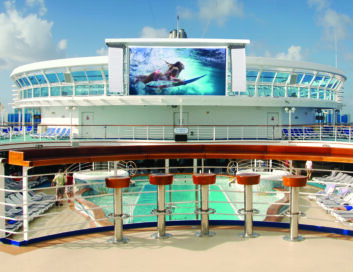
Whatever the future brings, it’s hard to imagine the physical estate of retail increasing much. Increasingly, the talk is of ‘bells & whistles’ flagship stores located in a limited number of cities, but that doesn’t mean that what remains can’t be made to perform more effectively. Meanwhile, hotels and cruise ships are leveraging AV to improve consumer experience.
David Yates, founder & MD of multi-disciplined design studio Recursive Digital, on retail: “Of course the pandemic had an impact, but the change in the use of technology was happening long before that. From 2012 or even earlier, many operators were looking at how bricks and mortar stores needed to evolve to make them a destination for people to come to. And as that’s matured, the market has sort of adjusted to the idea of experiences and addressing questions like ‘Why am I coming to your store?’ and ‘What do I get by coming to your store that I don’t get online?’ Stitching the online and the store together, and being able to have a joined-up experience, is a massive thing now.”
EXPERIENCE ECONOMY
With most mature economies either suffering from low growth or teetering on the edge of recession, and the general escalating global uncertainty to contend with, how are organisations viewing the underlying conditions for R&H? As one might expect, it’s a bit of a ‘mixed bag’, although certainly there are plenty of brighter aspects.
Sean Wargo, senior vice-president market insight at AVIXA, observes: “Over the past few years, R&H has benefited from a return to in-person activity to some degree. Consumers have remained willing to increase their spending year over year, as they travelled more and attended live events. This helped hospitality, in particular, as hotels saw increased activity.”

However, he adds: “The current economic context, with tariffs in play, challenges this growth as the consumer starts to pull back more. But there are still some robust and growing parts of the world, like India, Brazil, UAE, and Nigeria, where a rising middle class is spending more. In general, we experience the overall theme of the experience economy to be a driver of growth for markets like hospitality and retail for many years to come.”
“I would say that investments are being very carefully considered at the moment in R&H,” says Yates. “The hospitality side is obviously really struggling. However, it’s good that there are some really innovative projects taking place; it’s just that they are maybe a little sparser in number than they used to be.”
Pierre Gillet, vice-president of international sales at digital signage platform technology developer BrightSign, highlights a feeling of “uncertainty” in parts of R&H whilst adding: “We are doing a lot of large retail projects worldwide, so that’s still a strong vertical for us. But I think that what we see in the past few months with the global economy is that some projects closed at the end of last year or the beginning of this year, and which were expected to roll out throughout 2025, are slower to roll out. However, we also note that there is still a very strong interest in innovation.”
Yannis Pagoulatos, head of Europe – department business development & LED at electronics giant LG, pinpoints a post-Covid resurgence in consumer activity: “The pandemic affected the traffic, but only temporarily as now we see figures returning to the pre-pandemic era. What is affected most is the behavioural change and the patterns of purchase, stay and travel which require the big retail brands, hotel chains, transport companies and cruises to refresh their product. Consumers have more need for digital information in real-time and require more digital tools to perform their transactions seamlessly.”
In a sentiment echoing many other contributors to this article, he adds: “How you communicate in a digital way first to attract the consumer is really important and requires the right information display tools.”
Moreover, this shift towards a more immersive in-store experience is not limited to the visual. Like display technologies, audio has also witnessed a flurry of innovations in recent years that lend themselves to next-generation R&H concepts.
SIGNIFICANT CHALLENGES
Gina Sansivero is VP marketing and corporate communications at pro audio specialist AtlasIED. “The retail and hospitality industries experienced significant challenges after the pandemic,” she says. “However, AtlasIED has witnessed a strong rebound driven by a renewed focus on customer experience and operational efficiency. While many establishments have embraced various technologies to set themselves apart in a competitive landscape, audio technology has played a crucial role in shaping ambiance, reinforcing brand identity, and enhancing communication.”
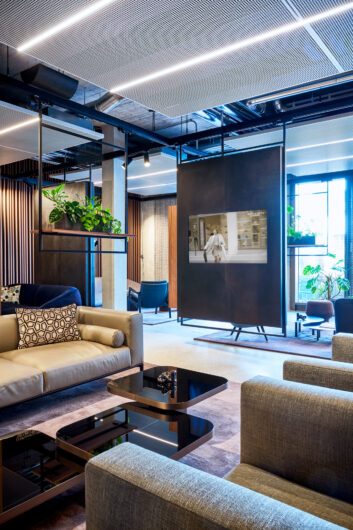
There is no doubt that – for at least a decade – R&H has benefited from a ‘perfect storm’ of developments shaping the display and digital signage market. Sustained innovation coupled with more efficient production and, therefore, lower cost options has brought powerful new technologies within the reach of a broader customer base than would have been the case in previous technological cycles. Then there is the fact that many of the new technologies lend themselves to R&H’s requirement for high-impact characterised by brightness and vivid colours.
“The continual driver of increasing adoption of display technology is manufacturing efficiencies that help push down costs,” confirms Wargo. “As new technologies come out, like Direct View LED, increasing production capacity helps bring down costs that then spurs investment.
“This has been a theme for decades. Higher resolutions, thinner panels, and increased energy efficiency make the newer displays appealing for a wider variety of use cases, which lower costs help reinforce. This is particularly true for retail and hospitality, which are the core markets for displays given that they are environments that are rich branding opportunities that also require visuals for supporting the customer experience.”
Pagoulatos says: “Adding more displays and more interactivity helps attract consumers and also creates operational efficiencies through customer self-service options which direct them more easily to the desired purchase patterns. Everybody can switch off their mobile, but nobody can avoid public displays.”
James Keen, EVP marketing of digital signage software company Uniguest, summarises some of the varied requirements of display technologies residing under the R&H umbrella: “F&B (food & beverage), retail and hospitality are often some of the most varied users of digital signage technology, with their sales model often dictating that they ask a lot of their display estate and CMS partner. We provide interactive kiosks for service ordering, product information, catalogue browsing, wayfinding for QSR, plus Digital Menu Boards for F&B retailers – a really key technology to help drive cross sell, up-sell, improved value per transaction, and sale velocity. On top of this there is also a huge need for general, promotional digital signage.”
He adds: “Hotels are a slightly different kettle of fish; they want all of the above as they often have on-site amenities that require it, plus they have conference space displays showing the day’s agenda, meeting room signs to help ensure guests end up in the right place, and digital concierge services to help keep guests informed and feeling welcome.”
DRIVING GROWTH
In general, it seems that large displays using one or other forms of LED technology are driving growth for many vendors across different facets of R&H. As indicated during the introduction, fashion and luxury remain primary categories here, thanks to their inherent need to prioritise the showcasing of products – and surrounding services – to their best possible advantage.
For instance, Sharp NEC recently provided visualisation solutions for the new Welcome Centre at what is described as Europe’s biggest designer outlet, Outletcity Metzingen, in Germany. With requirements to suit diverse visitor needs and high design and quality requirements, integrator VKT installed an NEC MultiSync V984Q large format display in the entrance area; a total of three NEC MultiSync M551 large format displays in the exclusive lounge and Atelier changing room area; an NEC MultiSync V754Q in front of the Studio for signage purposes and to welcome customers; and two more NEC MultiSync M551s in the conference room.
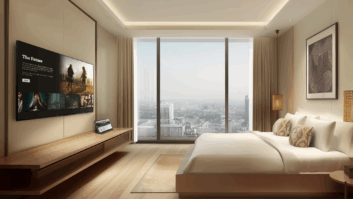
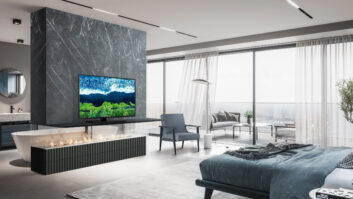
Another interesting source of growth has been the adoption of Smart TVs in hotels and on cruise vessels – a sub-sector of hospitality that has resounded strongly since the pandemic, with global revenue nearly restored to pre-Covid levels as soon as 2023, according to data from Statista.
Pagoulatos says: “With the launching of OLED Hospitality TVs in 2016, LG made a strong impact in the luxury cruise market segment where four out of five luxury ships use OLED TVs.” The next transition we can expect, he indicates, is the “revitalisation plan of large entertainment and experiential LED displays. Cruise liners looking to keep their passengers outside in the public areas and create memorable impressions use these large and flexible format displays to show artistic content which helps position the lines as an entertainment destination”.
More generally, as one might expect, there has also been a decisive increase in expectations surrounding content. Gillet observes: “There have been customers who have done digital signage over the past few years, but just for basic looping video. But now they want to talk to us about offering more immersive, interactive experiences that can be lived and learned. They are interested in using our solutions as part of their focus on immersive brand storytelling.”
AUDIO EFFECTS
Simultaneously, the contribution that audio can make to R&H storytelling is being more widely acknowledged. As in so many other public spaces, immersive audio systems are achieving traction, while IP-based connectivity and control & processing platforms with cloud/remote management capabilities – especially useful to operators with large estates – are finding a receptive audience.
For AtlasIED – for which its Atmosphere audio processing and control platform offers user-friendly control over multi-zone environments – Sansivero says: “The ability to manage audio remotely, customise zone control, and ensure consistent sound across environments is transforming how R&H venues think about communication and ambiance.” In addition, there is strong interest in systems that blend into “architectural aesthetics” while offering advanced features like AI-based ambient noise compensation, seamless integration with mobile devices, and automated message playback.
Stephen Rhead, Sonos Professional IS manager UK, highlights audio’s role in store transformation and a growing recognition by businesses that sound can “significantly influence “atmosphere and customer engagement. “There’s a growing interest in bespoke music services and professional-grade audio solutions, especially as businesses move away from consumer streaming platforms that often fall short in commercial settings,” he adds.

With products such as the Era 100 Pro premium speaker with Power over Ethernet (Poe) and custom audio zone creation, Rhead goes on: “We’re seeing the strongest demand from mid to high-end retail and hospitality venues; spaces such as boutique hotels, luxury clothing stores and premium restaurants. These businesses often have the budget and brand focus to invest in quality AV experiences.”
Familiarity with the brand in a residential setting also appears to have assisted. “There has always been a strong interest in Sonos from this market, and we’ve had scenarios where business owners have had Sonos at home and thought it was a good idea to implement it into their business. It’s this demand which encouraged us to move into the professional sphere.”
ONES TO WATCH
Several key technologies rose to the top when contributors were invited to nominate ‘ones to watch’ in R&H over the next few years. Several expressed sentiments similar to the recent Futuresource report about augmented reality in retail, which noted: “Once seen as a futuristic add-on, AR is now a practical tool transforming the way consumers interact with brands and products. By enabling virtual try-ons, 3D visualisation and immersive product experiences, AR closes the gap between intention and purchase.”
There is also a near-universal expectation that AI will be transformative as part of a more closely integrated – and personalised – retail ecosystem. Wargo says: “AI enables personalisation, delivered through smart displays. That itself is an example of XR, but so too is the blending of the mobile, online and in-store experiences, as is increasingly being done. The store itself has become a brand experience, which then extends into mobile and online for the actual purchasing and delivery activity. In hospitality, personal devices can do the same, as the guests find their way around the property.”
Rhead says: “AI is already starting to influence the AV landscape, and it’s of course something which everyone is looking at. All our products have voice control which is trained using AI-generated data (and not customer data). Looking ahead, we expect AI to play a bigger role in personalising audio experiences and streamlining system management. As for immersive audio, whilst we don’t see the hospitality side of the business requiring AI immediately, we believe retail will look to embrace it, especially as it becomes more accessible and aligns with the trend of creating memorable, sensory-rich environments.”
CONNECTED CLOUDS
Developments in connectivity, interactivity and cloud-based management are cited by Pagoulatos: “For example, one new addition to our passive fixed format displays is the ability to communicate via infrasound with the mobile devices of the user groups in each of the above-mentioned verticals. This enhances the interactivity of these products. Another example of the increased scope is our cloud solutions for our displays, such as Connected Care, which increase the real-time information from our displays to the IT managers, which makes our products an IT asset. This means lifetime and functions can be monitored in real-time and improved with predictive maintenance.”
Most universally, it is safe to say that harnessing new technology will be more central to the mindset of all engaged with the R&H ecosystem.
Last word to Keen: “Technology is now a means to create revenue, and that is the key – it’s no longer an infrastructural investment, it’s a tool of the marketing team. This, I suppose, is where I see the market opportunity evolving; marketing teams always have a strong grasp on their digital impact via social, web, PPC and so on, but they often don’t have a firm grip on how the ‘phygital’ matters to their broader marketing plan. When a customer has engaged via digital and enters a physical space they need to see consistency. They are there because you influenced them – now sealing the deal is the job of the physical space.”