Integrated Systems Europe returns to the Fira de Barcelona from February 3-6 following its strongest edition to date last year. While the show’s physical footprint remains largely unchanged – with the planned Hall Zero expansion now deferred until 2028 – ISE 2026 signals a more deliberate shift in emphasis. Under the banner “Push Beyond”, the focus has moved towards how the AV industry is adapting to new operational realities: AI transitioning from experimentation to deployment; cybersecurity treated as a commercial and regulatory requirement; education, skills and talent development given greater prominence; and start-up innovation and creative production workflows pushed closer to prominence on the show floor.
The result is an event positioned not simply as the premier global AV exhibition, but as a meeting point for a maturing industry with boundaries now extending into broadcast, IT, education, and the wider creative and built-environment sectors.
 According to managing director Mike Blackman, ISE is a world-class experience designed to ignite the senses and spark the imagination, but one that also reflects deeper structural change across the technology sectors it now serves.“Convergence is no longer an emerging theme,” he says, “but the organising principle for how the industry now works.”
SHOW SCALE
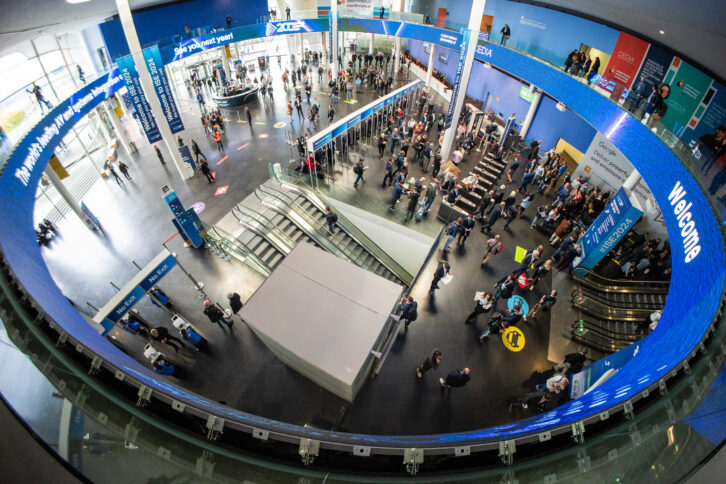
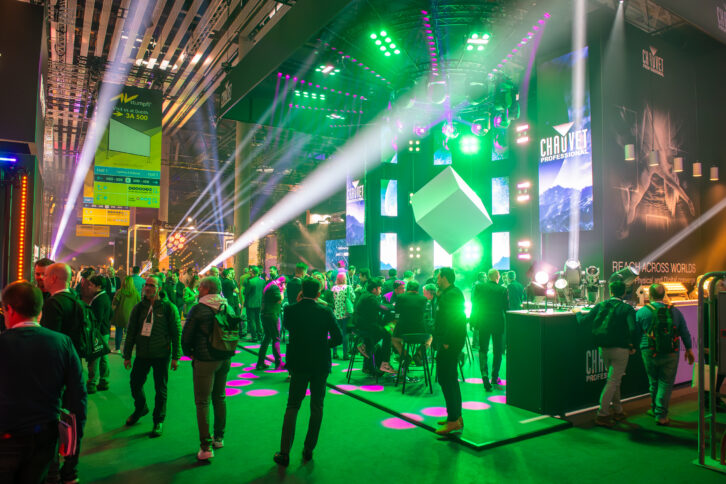
That repositioning is reflected in how ISE 2026 has been configured. While the show is not expanding physically this year, it remains substantial by any measure, with the official floorplan confirming almost 82,000sqm of exhibitor space spread across eight halls and seven expanded Technology Zones. Several zones now extend further into the East Access area, adding more than 2,700sqm of additional capacity, including over 1,400sqm of new exhibitor floorspace.
In total, 1,709 exhibitors have been confirmed for the 2026 edition, including 323 first-time participants – figures that underline ISE’s continued pull, even as its emphasis shifts from raw growth to how different communities are brought together and supported across the show floor.
This scale comes despite the delay to Hall Zero, long positioned as the show’s next major physical expansion. Blackman has previously described the project as “a game-changer”, but for 2026 the emphasis is on making the most effective use of the existing footprint and ensuring that different communities are properly supported within it.
INDUSTRY CONTEXT
In that context, the headline numbers matter less as a simple continuation of ISE’s growth story than as an indication of a show operating close to practical capacity. With large-scale physical expansion now pushed back, greater attention is being paid to how space is configured and how visitors engage with it in practice.
That reflects a broader industry reality. AV, broadcast, IT, education technology and creative production increasingly overlap in real-world projects, where systems are expected to be networked, secure, scalable and content-aware from the outset. The neat vertical distinctions that once defined the show floor no longer align with how integrators, consultants and end users operate day to day.
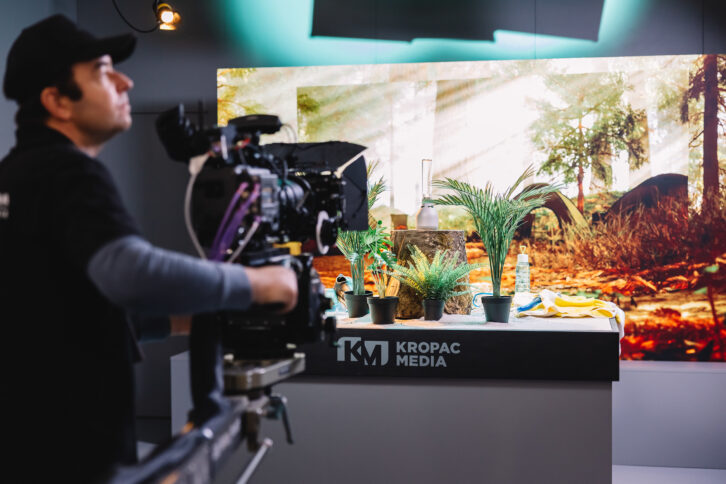 ISE’s evolution mirrors that shift. What began as a predominantly AV-focused exhibition has, over time, absorbed broadcast technologies repurposed for live events and corporate production, IT infrastructure critical to smart buildings, and creative workflows drawn from media, gaming and experiential design. In 2026, convergence is no longer framed as a trend, but as the baseline the show is built around.
With physical expansion temporarily constrained, ISE is placing greater emphasis on curation, structure and relevance, responding to the practical challenge of navigating an increasingly converged industry.
LISTENING SPACES
One of the most tangible additions for 2026 is the introduction of eight purpose-built High-End Listening Suites in the refurbished CC2 area. Designed for controlled, appointment-based demonstrations, the suites give high-end residential and specialist audio brands an environment closer to a critical listening room than a conventional trade-show booth.
The move responds directly to exhibitor and integrator feedback. As premium audio systems become more sophisticated – and more difficult to evaluate amid show-floor noise – the need for controlled environments has become increasingly clear. For integrators working in luxury residential cinema, boutique hospitality or immersive entertainment environments, the listening suites provide a more realistic benchmark for how systems behave when properly specified, calibrated and installed.
More broadly, the addition reflects ISE’s focus on improving the quality of on-site experiences within the space available for 2026. It is an example of how the show is making targeted use of its existing footprint to support more meaningful engagement while longer-term expansion plans progress.
AI REALITY
AI was highly visible at ISE 2025, but its more significant impact was in how it was being absorbed into day-to-day system design and management. For 2026, the focus moves to how those capabilities are deployed, governed and supported at scale.
A key element of the 2026 programme is the keynote from Sol Rashidi, a recognised AI strategist with senior leadership experience across Sony Music, Merck, Estée Lauder and Amazon. Her session, The AI Reality Check: What It Takes to Scale and the Future of Leadership, is framed around enterprise deployment, governance and accountability rather than speculative disruption.
Rashidi has argued that the real challenge around AI lies less in adoption than in leadership, governance and the ability to scale responsibly – a view that increasingly resonates across the AV sector as AI becomes an operational layer underpinning analytics, automation, content management and service delivery.
That argument reflects a broader recalibration. Where AI once appeared as a differentiator, it is now being treated as infrastructure – something expected to work reliably, securely and transparently within larger systems. For integrators and manufacturers alike, the questions have shifted from “what can AI do?” to “how is it governed, secured and supported at scale?”
 CYBER PRIORITY
If AI is increasingly treated as infrastructure, cybersecurity has become non-negotiable. As AV systems embed themselves deeper into mission-critical environments – from control rooms and transport hubs to education campuses and smart buildings – the risks associated with insecure systems have moved firmly into commercial, regulatory and reputational territory.
ISE 2026 is responding with the introduction of its first dedicated CyberSecurity Summit, signalling a recognition that security is no longer a technical sidebar but a core competency.
Cybersecurity has become a business-critical concern, according to Blackman, with implications that extend well beyond day-to-day security controls. “It’s no longer a technical afterthought,” he adds, pointing to its growing importance in public tenders, regulatory compliance and long-term trust.
The summit is designed to move beyond abstract risk and into practical frameworks, regulatory readiness and real-world experience – reflecting how security now shapes procurement decisions, liability exposure and long-term service models. Education also remains one of ISE’s most consistent growth sectors, and in 2026 that focus is more visible and more purposeful on the show floor. The EdTech Congress Barcelona returns as a co-hosted event alongside ISE, while the Connected Classroom showcase makes its second appearance in Hall 2.
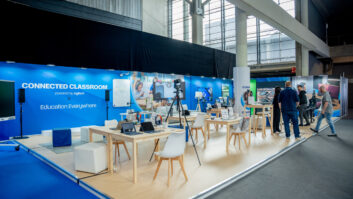
The 120sqm Connected Classroom is divided into four interactive zones, each tailored to different educational needs. The space features hands-on demonstrations spanning video-enabled learning, student content creation and immersive AR/VR exploration, illustrating how integrated AV and collaboration technologies can support more inclusive and engaging learning environments.
The Connected Classroom concept originated from a conversation between Jason Whitcomb, founder of experiential agency Kinetic Culture, product marketing expert Jeff Boggess, and Mike Blackman, before being developed by ISE and brought to life with support from Logitech.
“The Connected Classroom began as a coffee chat and a shared belief that the AV community could leave a positive and lasting mark on Barcelona and beyond,” says Whitcomb. “From that conversation grew something far greater than a showcase at ISE – it became a bridge between industry innovation and classrooms around the world.”
Logitech views the initiative as both a market opportunity and a learning platform. “Education is one of the most exciting growth areas for Logitech,” says Gaurav Bradoo, head of product and portfolio. “The Connected Classroom allows us to show how our solutions support teachers and empower students across diverse learning environments. The conversations we have here provide meaningful insight into how education is changing globally.”
Beyond demonstration, the initiative also carries a social dimension. A substantial portion of the showcased technology will be donated to the International Telecommunication Union and UNICEF’s Giga project, which aims to connect every classroom in the world online. Following ISE 2025, more than 30 pieces of Logitech equipment were donated to Giga’s Connectivity Centre.
“Connected Classroom is far more than a showcase of what’s possible with technology,” adds Blackman. “It’s also a commitment to making a difference.”
 CREATIVE SPARK
Perhaps the most strategically ambitious addition to the 2026 programme is Spark, a new four-day, cross-vertical event for the creative industries, boasting sessions from international experts. Debuting during ISE week within a dedicated 1,000sqm arena in Hall 8.1, Spark is conceived as a response to the fragmentation of creative-sector events.
The combined conference and tech showcase is designed to foster real-time collaboration between creative professionals, technologists, and decision-makers, and is structured around four high-impact tracks: Broadcast, Live Events, Gaming, and Marketing & Design.
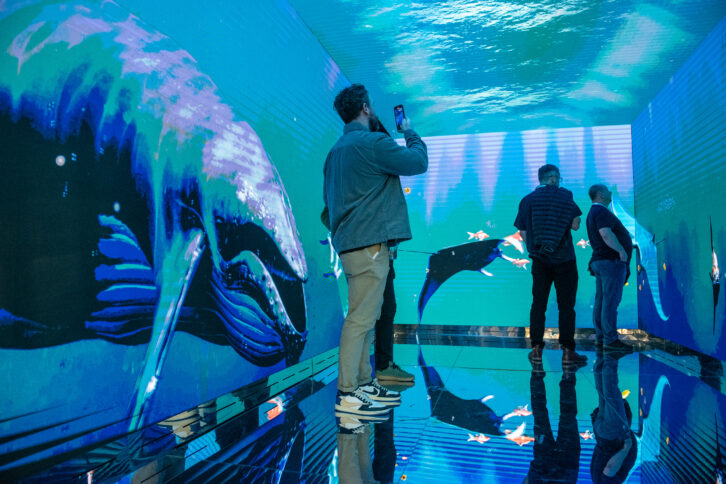
Throughout Spark’s technology activations and demonstrations, visitors can expect to step into immersive technology environments, explore cutting-edge tools firsthand, and network across creative disciplines and sectors.
“Creative sector events are too fragmented,” says Blackman. “Spark is not a traditional event – it’s a cross-industry platform to showcase, connect, and ignite creativity.”
Built around activations, networking and a curated content programme, Spark reflects how creative workflows increasingly operate across converged toolsets, from virtual production and real-time graphics to live experience design. While 2026 offers the first glimpse, the longer-term ambition is for Spark to evolve into a standalone event alongside ISE.
STARTUP HUB
Innovation Park returns in 2026 with an expanded footprint and a more central role within the show. Located in Congress Square near Halls 4, 5, 6 and 7, the area hosts more than 130 exhibition pods, including around 80 startups alongside first-time and returning exhibitors.
“Innovation Park is a dynamic marketplace where startups, buyers, and investors can come together to explore the future of AV and systems integration,” says Blackman. “Whether you’re looking for high-growth investment opportunities or groundbreaking solutions ready for implementation, Innovation Park is the place where ideas and opportunity meet.”
Supporting features include the Pitching Stage, a redesigned Matchmaking Area powered by Ambivation, and the Investor Forum, positioning Innovation Park less as a showcase and more as a deal-flow engine. The presence of the Catalonia Pavilion and Barcelona City Council stand further underlines the show’s role in connecting global innovation with regional ecosystems. ISE’s focus on innovation also extends to skills development and early-career engagement. The ISE Hackathon returns following its 2025 debut, bringing students together to tackle challenges spanning sustainability, innovation and cybersecurity.
Blackman has described the first edition as “a resounding success” and a practical expression of ISE’s ambition to nurture the next generation of AV professionals. By pairing students with industry mentors and sponsors, the format addresses a skills challenge that continues to intensify as systems converge and technical expectations rise.
CONTENT PROGRAMME
Launching at ISE 2026, the new Megatrends content programme offers up to 14 hours of discussion-driven sessions over three days for a €99 pass, reflecting a deliberate attempt to broaden access while creating space for informed, critical discussion.
Covering AI, Cybersecurity, Robotics, Smart Spaces, TradeScape and Sustainability, the programme is designed to provoke discussion around forces shaping the industry well beyond the show floor. Sessions take place in room CC5.3 and feature a mix of panels and presentations intended to challenge established thinking.
Topics range from the impact of tariffs and regulation on manufacturing, to robotics’ influence on creativity, and the future of smart spaces and conferencing. The format reflects ISE’s growing confidence in its role as a forum for strategic discussion, not just product launch.
Alongside new initiatives, the core ISE content programme is evolving. The Track Sessions introduced in 2025 return with refinements, again focusing on AI, audio, cybersecurity, retail and sustainability. These sit alongside established Summits covering smart buildings, digital signage, education, workplace, control rooms and broadcast.
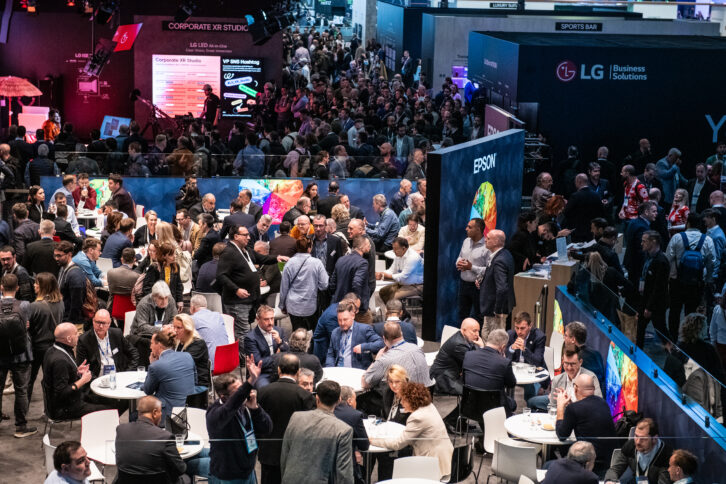 AVIXA’s Xchange Live and CEDIA’s expanded workshop programmes provide further depth, addressing certification, immersive audio design and business planning. Together, these formats reflect a broader attempt to help visitors navigate complexity through structure and curation.
SHOW-FLOOR TOURS
Curated show-floor tours return in 2026 as a practical response to the increasing complexity of the show. Designed both for first-time visitors and experienced attendees, the tours provide structured routes through key themes such as education technology, Megatrends and broadcast AV – helping visitors contextualise products and solutions within wider system and workflow trends. In a show operating close to capacity, the tours are intended to support more efficient use of time, guiding attendees towards relevant conversations rather than relying on ad-hoc discovery alone.
If ISE 2025 was defined by record numbers and renewed confidence, ISE 2026 is set to focus on consolidation and maturity. Physical expansion may be constrained in the short term, but the show’s conceptual footprint continues to widen – drawing in cybersecurity specialists, educators, creative directors, IT architects, broadcast engineers, investors and students, alongside the traditional AV integration community.
“Our mission remains to champion the AV industry and the markets we serve,” says Blackman. “We want to share these ideas with you, and we look forward to seeing them come to life in 2026 and beyond.”
With its sharpened focus, structured content and expanding cross-industry reach, ISE 2026 reflects a show in transition – responding pragmatically to short-term constraints while setting the direction for its next phase of growth.
Integrated Systems Europe takes place from February 3-6 2026 at Fira de Barcelona Gran Via.
You can subscribe to Installation magazine for free here and the daily newsletter here.