There’s no shortage of impressive AV in retail. Walk into a flagship store and you’ll encounter displays on a scale once reserved for a concert venue. Some are spectacular, although the commercial case for such installations is becoming harder to make when retailers are under such financial pressure.
For years, retailers have invested in technology to make shopping more engaging. Now they also want to know whether AV can influence what customers buy. The growth of retail media reflects the commercial interest in reaching shoppers while they are in stores. According to IAB UK, retail media advertising expenditure rose 18 per cent to £3.8bn in 2025. Although the figure largely reflects spending on digital advertising rather than screens, it shows the appetite for advertising in retail.
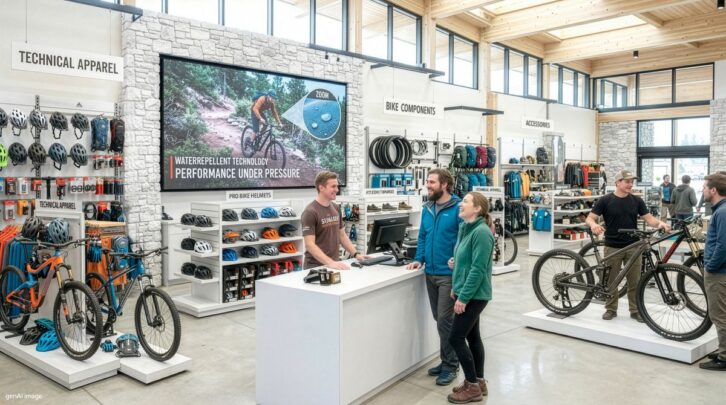
Digital signage allows retailers to sell advertising space to suppliers alongside promoting their own products. The campaigns can be managed centrally and adapted to individual locations. Co-op provides a useful illustration. In November 2025, its retail media network announced the installation of its 1,000th front-of-store digital screen, bringing its total to 15,871 digital advertising touchpoints across 2,300 stores. The network encompasses self-service checkouts and other customer-facing displays, providing lots of advertisers opportunities.

MEASURING ENGAGEMENT
Establishing whether all this advertising changes what customers buy is tricky. But there is concrete evidence from research published in the Journal of Marketing. Analysing 237 advertising campaigns involving 30m shoppers, researchers found that exposure to in-store digital signage increased the likelihood of purchasing by 8.1 per cent.
The results varied according to product category and advertising conditions. Displays positioned close to the advertised product were more effective, while factors including time of day and type of message also influenced performance.
For retailers, the research provides insights into how to plan campaigns. It also shows that content management platforms need to accommodate centrally scheduled campaigns. Retailers need to know which campaigns are working, and where.
 Custom Channels’ work with Goodwill Industries of Southwestern Michigan provides another example of how existing AV infrastructure can serve a broader purpose. Across 11 stores, Goodwill uses centrally managed audio to tailor music to individual locations while delivering messages about its employment programmes and community services.
Rather than giving airtime to commercial radio stations, Goodwill communicates directly with customers. Messages can be scheduled for particular locations, allowing the organisation to promote programmes relevant to those communities. The infrastructure providing background music is promoting the organisation.
OPERATIONAL PRIORITIES
Managing AV across a large retail estate brings practical challenges. Displays and audio systems need to be monitored remotely, content has to be updated across multiple locations, and faults dealt with before they affect store operations.
Maintenance can become expensive when equipment is spread across hundreds of locations. But there are ways to mitigate the long-term costs. For a start, remote monitoring and diagnostics can reduce engineer visits. And companies’ purchasing decisions should also take into account equipment power consumption and lifespan..
AI-assisted content scheduling and audience analysis offer further efficiencies, although some of the more  ambitious claims deserve scrutiny. Retailers will want concrete evidence that these applications improve performance, particularly when their deployment involves collecting information about customers.
These new commercial realities have placed greater demand on the expertise of integrators. Retailers need suppliers who understand how their marketing teams operate and how technology can support commercial objectives across an entire estate. Those prepared to engage with these requirements at the planning stage are also better placed to provide ongoing management and support.
Retailers aren’t about to abandon spectacular AV installations, and nor should they. But as retail media becomes a more significant commercial opportunity, the ability to generate advertising revenue and demonstrate its value will carry greater weight in investment decisions. For integrators, that means understanding how a retailer intends to use its AV infrastructure commercially.
You can subscribe to Installation magazine for free here and the daily newsletter here.