With huge advances in collaboration, display and presentation technologies – among other areas of development – in recent years, it’s arguable that competition for AV tech-related investment by schools and colleges has never been more intense. Simultaneously, however, budgets have often been declining in real terms in the US, UK and other European countries, rendering spending decisions more challenging.
In this article we’ll look at the current factors shaping the purchase of new AV equipment by educational facilities; the areas of technology where investment is most concentrated; and the extent to which AI-powered solutions are likely to become a fixture of schools and colleges in the next few years.

GROWTH SLOWDOWN
Mike Sullivan-Trainor, senior industry analyst at AVIXA, confirms that the market is facing fresh challenges – many stemming from governmental cutbacks. “Education is witnessing a slowdown in growth, declining from 3.1 percent year-over-year in 2024 to a projected 2.6 percent in 2025,” he says.
“While the sector continues to expand, the deceleration is primarily due to the suspension or cancellation of several government-funded school upgrade projects, particularly in the US, Germany and other European nations. Federal funding cuts are having a significant impact on higher education in the US, affecting grants and financial support for institutions and students.”
Nonetheless, the latest AVIXA Industry Outlook and Trends Analysis (IOTA) confirms that education is still one of the largest pro AV sectors, with projected growth from $320.9bn in 2024 to $332.2bn this year.
Sales across a wide range of AV segments continue to play a significant part: “Growth within this sector is primarily driven by increased device shipments, especially in high-value segments such as interactive technologies and AR/VR solutions. Significant year-on-year growth has also been observed in products that support hybrid learning models, such as LED video displays, headphones, headsets, ear sets and collaboration systems. This trend also suggests that a device refresh cycle is underway, particularly for products acquired during the Covid-19 pandemic. Devices with shorter lifecycles are experiencing a more pronounced impact during the short-term forecast.”
BUDGET CONSTRAINTS
Sullivan-Trainor agrees that budget constraints are prompting educational institutions to be more strategic in their AV investments, focusing on technologies that “deliver long-term value and adaptability”.
Of the way that spending decisions are made, he adds: “There is a clear prioritisation of solutions that support hybrid learning environments, including lecture capture systems, cloud-based collaboration platforms, and AVoIP infrastructure, allowing institutions to extend the reach of their teaching and optimise space usage. The shift to hybrid has also accelerated the need for intuitive and user-friendly systems that require minimal technical support, ensuring that educators can focus on teaching rather than technology. Importantly, institutions are also investing in AV solutions that enhance accessibility and inclusivity, recognising the role of AV in supporting diverse learning needs.”
DISPLAYS & PROJECTORS
Given their centrality to so many aspects of the learning experience, display solutions have always been a huge part of the technology renewal process. After something of a lull, it appears that there are positive signs here. Sullivan-Trainor says: “Within the education sector projector shipments are expected to return to growth starting in 2026, following a temporary decline observed from 2023 to 2025 in the post-pandemic period. This rebound is anticipated as part of the broader device refresh cycle.”
Jeremy Wills, principal analyst of pro displays and imaging at Futuresource Consulting, expands upon the professional displays outlook in K-12 education (effectively, education from ages 4 to 16). “The USA, China and some European K-12 education markets, including the UK, are quite saturated by IFPD [interactive flat panel display] and IWB [interactive whiteboard]. There is also a continuing churn from IWB to IFPD, and from older IFPD to new IFPD.”
At present, the churn cycle on an IFPD is around seven years, but that is likely to be extended bearing in mind the growing financial demands on relatively static budgets, he says. Meanwhile, in other markets a relatively low penetration of front-of-classroom displays means there are opportunities for cost-effective projectors, while other trends include the use of DVLED for signage in lobbies, assembly halls and gymnasiums in schools in the US, and to a lesser degree, Europe.
VENDOR PERSPECTIVES
Pierre Gillet, vice-president of international sales at BrightSign, also alludes to a feeling of caution in the education market: “The spotlight is firmly on how all sectors – including education – are using existing installations and AV technologies, and how it’s continuing to meet specific requirements, before investing in new solutions,” he says. Accordingly, he suggests that AV decision-makers in education should evaluate three key factors when assessing whether they should purchase new AV technologies: define objectives before investing; demonstrate value to stakeholders; and maximise existing assets.
In terms of education market investment priorities for digital signage, Gillet cites wayfinding applications, especially for providing general information, or weather/emergency alerts on large campuses. He adds: “Many educational entities are also increasingly looking at digital signage for off-campus advertising, such as promoting upcoming enrolment opportunities and open days, hosting community or sporting events, and more.”
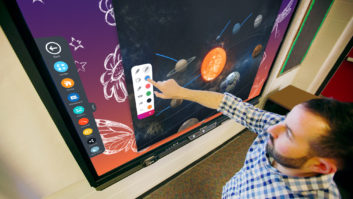
For LG, pre-sales engineer Mark Kitchen notes that educators are looking to AV technology to create a more effective learning environment, with durable, usable technology that allows teachers to freely move around the classroom during lessons. “As such, affordability, versatility and essential interactive features are key priorities. It’s also crucial that teachers can freely move around the classroom while conducting lessons, instead of just being stuck by a board – and that they can easily add web-based content and multimedia into lesson notes with a simple touch in real-time,” he explains.
LG’s own innovations in this area include the LG CreateBoard large-format smart displays that are tailored for diverse education settings. The CreateBoard comes in a Core, Standard and Pro version in sizes 55in, 65in, 75in and 86in, which offer different solutions including cloud collaboration and integration with LG’s connected care platform. “The Core version is particularly tailored to the education setting as it offers essential interactive features – such as handwriting on a touch display – at a more accessible price point. These products all have advanced AI capabilities and specialised educational solutions, which help teachers to deliver interactive, engaging lessons,” he adds.
AUDIO PERSPECTIVE
Providing an audio perspective is Jack Spenn, business development manager commercial audio – UK south at Audio-Technica. Various factors, such as a lower number of foreign students coming to the UK and higher fees obliging teenagers to rethink their educational paths, have resulted in a slowdown in investments in tech upgrades and campus development, he says. “Delayed projects this year have resulted in a reduction in revenue from this segment. But it’s also worth taking into consideration that the UK had a very strong year last year in the education segment, so I think we would probably have seen this level off, or decline slightly, this year anyway.”
Spenn cites three common priorities for education customers, beginning with integration – “how well our equipment works with other technologies such as camera systems and DSPs. Then there is support: can customers trust suppliers to provide adequate tech support? And reliability: can customers and end-users rely on the product to perform consistently throughout its lifespan?”
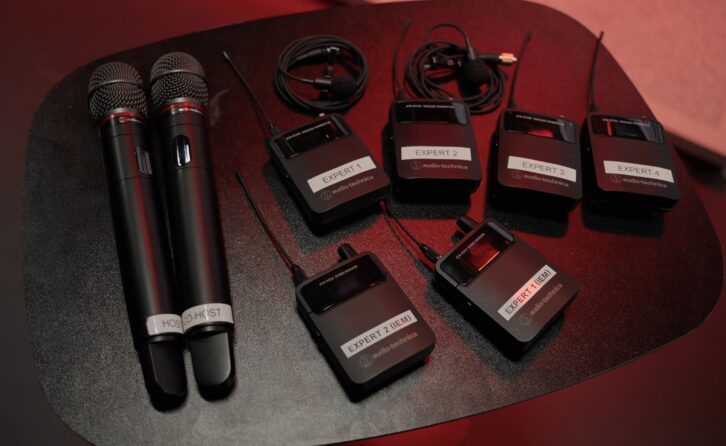
In terms of Audio-Technica’s own educational deployments, both Kingston and Swansea Universities have invested significantly in its ATR4697-USB condenser boundary model microphone. Elsewhere, Leeds University recently completed a project featuring 25 ATND1061DAN Beamforming Ceiling Microphones – which are Dante-enabled solutions for conference rooms and other meeting spaces where network connectivity is required – alongside ESW-R4180DAN wireless microphone systems.
STRONG SECURITY
Meanwhile, Gillet says that the wider security context of educational installations is becoming more critical. As digital signage systems become more intelligent and interconnected, they also become more vulnerable to cyber threats. Whilst they are invaluable in unlocking new revenue opportunities and boosting profitability, digital signage systems must be robust enough to protect against unauthorised access and data breaches that could undermine the entire installation. He says: “Strong security is no longer optional. It must take precedence as part of a security-by-design philosophy, as the foundation upon which reliable, connected AV experiences are built. Furthermore, strong digital signage solutions are essential in maintaining operational integrity and consumer trust, especially when they are connected to a remote management platform and third-party content management system (CMS).”
Gillet continues: “To mitigate against these risks, users must invest in secure media players connected to protected networks. These devices offer real-time monitoring, enterprise-grade updates, encryption, and audit trails, enabling early detection of anomalies. This approach delivers reliability and resilience in any environment.”
FUTURE DEVELOPMENTS
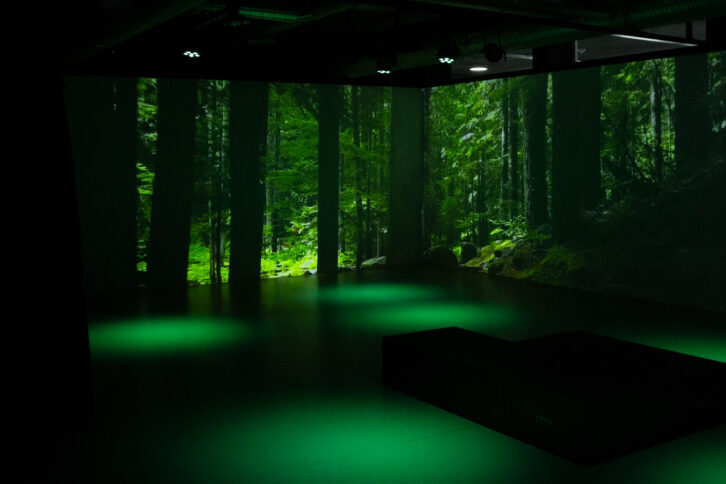
As to future technology expectations in this space, mixed reality and AI are the developments that are cited most frequently. Of the former, there have been a number of announcements recently that suggest a significant ‘gearing up’ is in progress, such as VR/AR specialist Avantis Education unveiling Eduverse CTE – described as its most comprehensive career training content to date and the first immersive library in a new series designed for career and technical education (CTE).
Of the latter, few would contest Gillet’s description of AI as a paradigm shift for the digital signage industry. “Over the next few years, it will continue to reshape how education establishments engage with students, lecturers and visitors. By embracing applications that leverage or support AI, digital signage owners can unlock new levels of interactivity, personalisation and efficiency that enhance customer engagement, satisfaction and business growth,” he comments.
Kitchen adds: “The challenges of engaging students mean that the education market will continue to invest in AI, with interactive tools being seen as crucial to helping teachers to bring lessons to life. Features such as live subtitles, AI video summaries and real-time annotation are all helping teachers to create more immersive, engaging learning experiences that extend beyond the traditional classroom.”
Last word to Sullivan-Trainor, who identifies several key opportunities for AV stakeholders as the education market evolves: “Vendors and integrators who can offer scalable, interoperable solutions that align with evolving teaching models will be best-positioned for success. There is also growing demand for managed services and lifecycle support as schools and universities seek to maximise ROI and reduce the burden that falls on internal IT teams. Additionally, the convergence of AV and IT continues to open new doors, particularly in areas like cybersecurity, remote device management, and data analytics. Integrators who can bridge these domains and offer targeted solutions will find some traction in the education space.”