Cosm has announced the 2026 version of Digistar, its immersive education software designed to merge scientific data sets with real-time astronomy simulations and game engine integration.
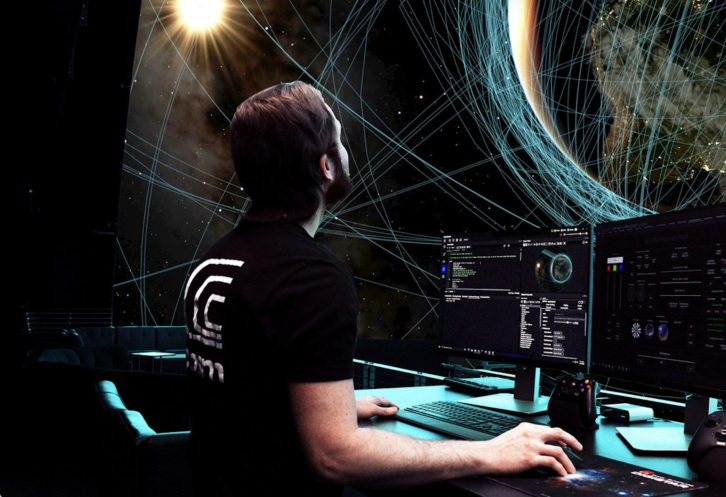 The release introduces what the company calls Domecasting, designed to provide live two-way interactivity between multiple domes and presenters. The update also includes enhanced integration with Unreal Engine, a real-time 3D creation platform developed by Epic Games. Cosm says this allows for simplified integration across theatre systems, and performance improvements.
The software works with scientific data visualisation and real-time rendering for planetarium and dome-based installations. The company says the updates are intended to enable institutions to deliver collaborative and dynamic presentations.
Digistar is a component of Cosm’s CX System, the company’s LED dome solution combining display technology, experiential production software and content. The system is installed at venues including the Jane & John Justin Foundation Omni Theatre at the Fort Worth Museum of Science & History, Prague Planetarium, and Arizona Science Center’s Dorrance DOME.
Kirk Johnson, chief operations officer at Cosm, said: “Since Digistar was born in 1981 as the world’s first digital 3D planetarium, our engineering teams have focused on building technology that evolves alongside the institutions it powers. With Digistar, that focus balances connection and visual impact, bringing audiences, data, and ideas together across domes while simplifying the systems operators rely on to deliver confident, seamless live experiences.”
The company says it currently powers more than 700 digital domes globally. A fourth CX System LED dome is scheduled to debut this autumn at the Fleischmann Planetarium at the University of Nevada, Reno.
You can subscribe to Installation magazine for free here and the daily newsletter here.