There’s no doubt that Isambard Kingdom Brunel was a visionary but even he could not have foreseen that his great ‘railway cathedrals’ – the magnificent stations on his Great Western Railway, notably London Paddington and Bristol Temple Meads – would, in less than 100 years, have to install sophisticated sound systems to announce train departures and arrivals.
Stations built after Brunel’s time and into the 20th century were often designed to be purely functional, with some being little more than engine sheds. It did not help that the PA technology of the time was not designed specifically for use in such ‘sheds’, laying the foundations for the bad reputation that transport audio systems are still trying to shake off today.
Technological advances were made in the 1980s and, particularly, the 1990s, with the development of directional loudspeakers, digital message systems and more sophisticated networking that allowed for zoning. This enables announcements to be routed to specific areas and not an entire building, a particular advantage during emergencies so that only people in the zone in question are aware of the situation. It forms the basis of voice alarm (VA) and Voice Alarm Control and Indication Equipment (VACIE) systems, which are increasingly integrated with the PA while still only being used in the direst circumstances.
CONSIDERABLE IMPROVEMENTS
Although transport audio technologies have improved considerably, they have to battle with the interiors of old buildings, as well as the trend for using glass and exposed metal in new builds. These installation difficulties, coupled with the higher passenger numbers passing through stations and airports, make designing and installing PA/VA systems challenging.
As examples of this change, Neil Voce, director of business development for Ambient Systems, developer of the smartVES PA/VA platform, points to both the Elizabeth Line through London, which opened in 2022 and features a Zenitel PA, and a recent retrofit project in Sweden that Ambient Systems was involved in where the operator agreed to use acoustic plaster in some areas.
“I would say the Elizabeth Line probably has the first stations in the UK to be designed with better acoustics,” he says. “They’ve been acoustically well treated in the first place, which makes the whole exercise of communicating with passengers and staff considerably more straightforward than at some of the older stations.”
As well as improvements to the passenger experience, Voce says there is also more awareness of the need to design systems with greater levels of reliability, particularly having no single point of failure. This reflects a broader shift towards operators demanding more reliable systems, with sophisticated monitoring covering parameters such as intelligibility, assistive listening and maintenance history.
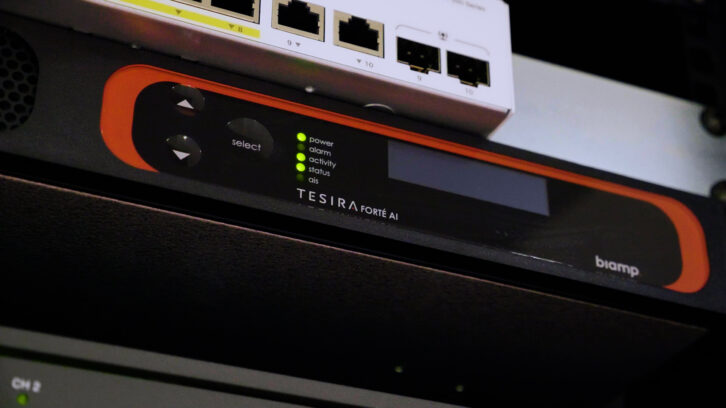
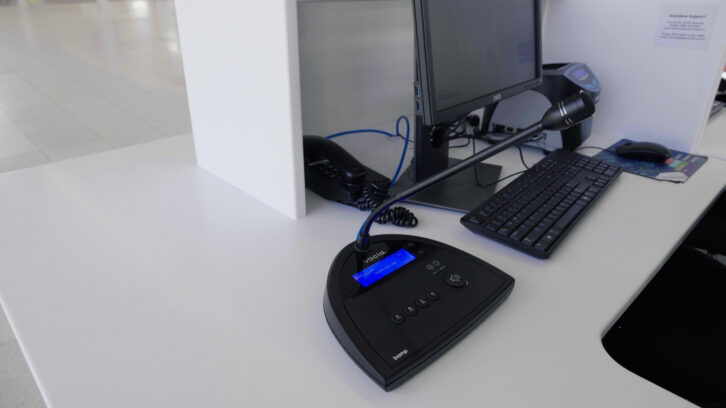
Any sound system used for emergency purposes has to be certified to the EN 54-16 standard for VACIE, part of the overall specification for fire detection and alarm systems. Among these is Biamp’s Vocia platform, the VACIE component of which Biamp senior product manager Paul Hand describes as having been “verified from the ground up”. This includes channel-to-channel failover on the amplifiers, with control automatically switched from one channel to another in case of a malfunction.
“We have the ability to monitor the microphone, which is self-checking, to make sure we’re still picking up good sound, all the way to the resiliency on the amplifier side,” he says. The EN 54-16 scheme also mandates for battery back-up feeds, with auxiliary 48V or auxiliary DC inputs, which allow devices to keep transmitting messages after a power loss.
The networking and monitoring of PA systems is essential, agrees Antonio Ferrari, director of the RCF Engineering Support Group. He says modern installations demand remote diagnostics and redundancy, plus integration with not only the VA but also building management systems:“Installation practices have become more rigorous, with a greater focus on commissioning, measurement, calibration and coordination among consultants, integrators, architects and manufacturers.”
Back in the early 1990s there was optimism that transport audio was starting to improve. One reason for this was how systems were designed, installed and operated, with a move away from fire alarm contractors to handle audio projects, to dedicated audio specialists. Over 30 years later, fire companies are still, incredibly, involved in audio installation, but they tend to also bring in companies that specialise in both audio and the rail sector.
Voxiss is one such a system integrator. Director Steve Wilson explains that the first task when coming on to a project is to produce a fault log of what needs to be corrected. “We can’t sign off and issue an EN54 compliance certificate on a system that’s got impedance errors and other faults,” he says. “It’s a bit of a learning curve for people because the systems are getting more sensitive to what’s causing faults and the reporting back is quite good. And obviously it’s got to be a fully monitored system.”
Modern loudspeaker design helps enormously in both directing sound where it needs to be heard and delivering intelligible speech at manageable levels. Wilson comments that speaker quality has improved massively, from the transformers and tweeters to the surrounds and casings. “What’s really helped with speaker choice is the EASE [Enhanced Acoustic Simulator for Engineers] modelling and BIM [Building Acoustic Modelling] that can be done now,” he says.
Wilson adds that with some environments, especially difficult stations, there is no one solution: “You could put in 20 Watt projector speakers running to their max to reach the required SPL, but the correct solution is to do a proper acoustic model using the EASE data produced by the manufacturer to understand what that cone of audio is and how your SPLs will be affected by materials in and around it.”
SPECIALIST TOOLS
Relevant external factors include what the areas around the loudspeakers are made of, but also the size of the building. “The initial design is extremely important to get audio right,” agrees Ian Bridgewater, managing director and technical director of TOA Corporation UK. “Specialist audio configuration tools allow our engineers to recreate the spaces virtually, taking into account materials and dimensions, such as ceiling height, which gives them the ability to work out specific solutions for the whole project.”

When it comes to loudspeaker types, Bridgewater identifies long-range line arrays as suited to external areas because they minimise vertical sound dispersion and reduce noise interference, with IP horn speakers working over standard IP networks for railway platforms, which reduces the need for extensive cabling. DSP-enabled loudspeakers are another option, which Jan Dańczak, sales technical support engineer at KEENFINITY Group (the Bosch Security and Communications Systems business now operating as an independent company), sees as becoming more common for various applications. “Beam steering is often a key to intelligibility in acoustically challenging spaces,” he says.
KEENFINITY has also developed a 100 Watt semi-directional sound projector loudspeaker for PA/VA, comprising several small speakers in a large disk array. Dańczak’s colleague Maarten Wings, global technical sales support director for PA/VA, explains that one unit can be installed high above an open space to cover the whole area. “By using automatic volume control and automatic gain control we can ensure good speech intelligibility,” he says.
In addition to ceiling speakers in general and steerable digital systems, columns, compact line arrays and directional point source systems are also options for system designers and integrators working on transport projects. AtlasIED produces several ranges that can be used in transport, including the IPX Series of IP speakers for airports, pendant models, paging horns and column arrays, such as the Aimline. RCF also has columns, horns and pendants.
Antonio Ferrari observes that the decision of which range to use depends on the geometry of the space. “Delay alignment and proper tuning are also essential for improving the direct-to-reverberant ratio [between direct sound and reflected reverberation] and maintaining clear voice reproduction,” he opines.
Despite the efforts of railway architects and designers of the past to make stations impressive structures, they were still a practical means to an end. People went there for one purpose: to travel. There was always a café and a newsstand, which also sold books and basic requirements, but these were not places anyone visited if they weren’t journeying.
Today, stations – and airports, perhaps to a lesser extent – have become a destination in themselves. A large provincial or metropolitan station will often be the centre of a wider development, with shops, bars, restaurants and a multiplex cinema. Increasingly, residential areas are also part of this, making the need to control sound from the concourse and platforms ever more critical. Because of this new remit, many railway PA systems now play background music in the general public areas.
TOA’s Ian Bridgewater comments that sound system manufacturers, designers and installers must understand the drive from hub operators is to generate external revenue through multifunctional retail and leisure facilities. “This has impacted what audio provision is required, not just on the concourse, platforms and boarding areas but also creating ambient noise in restaurants, bars, retail outlets and, at airports, duty free,” he says. “There is also a greater understanding from operators and designers about being more than a transport hub and the need to create stress-free ambient environments.”
ACCESSIBLE DEVELOPMENTS
Another crucial element in station and airport redevelopments or new builds, is accessibility. A good example is the redevelopment of the Bakerloo Line ticket office at Paddington. With the station itself now a tourist destination thanks to a small bear from Peru, it’s also the step-free access and open-plan design that help with its appeal – a huge improvement compared to the cramped, enclosed passageways that were there before.
A new Assisted Travel Lounge opened at Paddington earlier this year, where, as at other UK railway stations, induction loops are available for hearing impaired passengers. The induction loop is the longest-established example of what is now known as assistive listening systems (ALS). While loops have provided effective accessibility for many years in a variety of public areas, they do have limitations. Users have to find a specific hotspot to connect their hearing aids, while, from the installation perspective, specialised infrastructures have to be created.
Steve Wilson at Voxiss comments that although induction loops have been beneficial their effectiveness is declining, with hearing aid manufacturers beginning to move away from the technology. Wilson adds that for its installations, Voxiss is fitting IP amplifiers into station ‘furniture’, including totem information displays and station clocks, to deliver localised messaging.
Research from Futuresource shows that induction loops continue to dominate ALS for transport – between 70 to 80 percent of the installed base – but new technologies are positioned to replace them. “Demand is shifting towards Bluetooth Low Energy [BLE] Audio and Auracast,” says Saranraj Mathivanan, senior consultant for personal electronics at Futuresource.
“Auracast is in its early stages – well under 5 percent of deployments – but its growth is driven by the device ecosystem. Consumer headphones will reach approximately 47 percent Auracast penetration by 2029. Hearing aids are likely to move even faster, from around 3 percent today to potentially 60 percent by the end of the decade.”
DRAWBACK SOLUTIONS
Auracast broadcast audio is based on BLE and enables equipped devices, including smartphones, to stream good quality, low latency audio to earbuds, headphones and hearing aids. ALS developers, such as Ampetronic, have already produced systems based on Auracast and, says business development manager Jonathon Hoskin, transport operators are now looking for solutions to the infrastructure and coverage drawbacks of induction loops.
“Auracast is a Bluetooth standard and device agnostic, which aligns really well with what the telecoil, the induction loop receiver in a hearing aid, has been doing for over 40 years,” he says. “It allows a user to access audio without having to rely on an additional piece of technology. A huge number of consumer manufacturers have now started to adopt it, so not only can we use it as an assistive listening tool… in hearing aids, but also deliver audio to people bringing their own devices.”
It’s likely that transport hub audio will always be a contentious issue. Even the most optimistic of those working in the sector reluctantly agree that it will never be perfect, mainly as a result of the buildings that facilitate railways and runways – sometimes church-like, sometimes ultra-modern ‘hangers’; an acoustic challenge. Today’s technologies, however, are making a big difference, and audio vendors and integration professionals are working hard to improve things.
You can subscribe to Installation magazine for free here and the daily newsletter here.