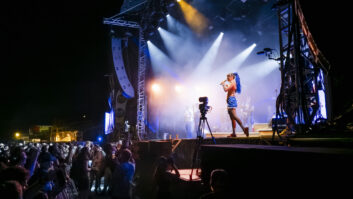
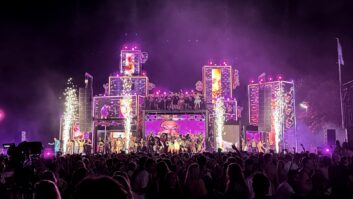
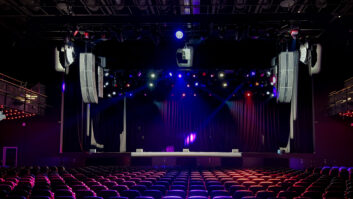
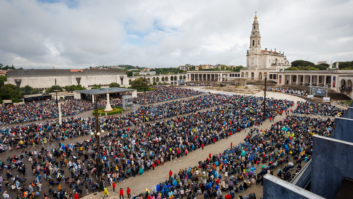
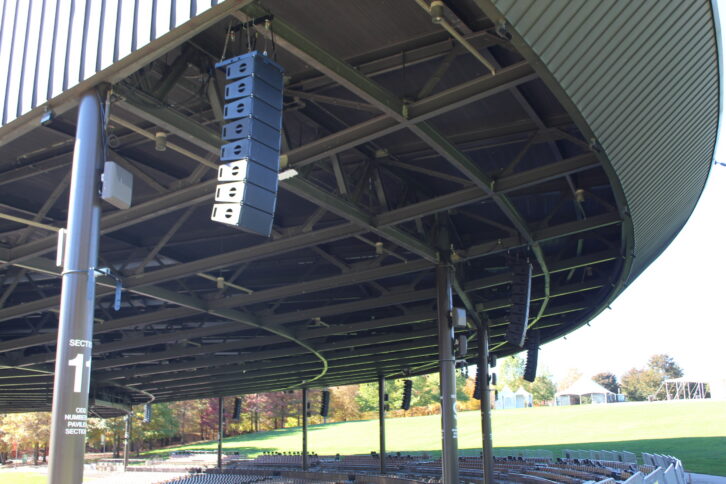
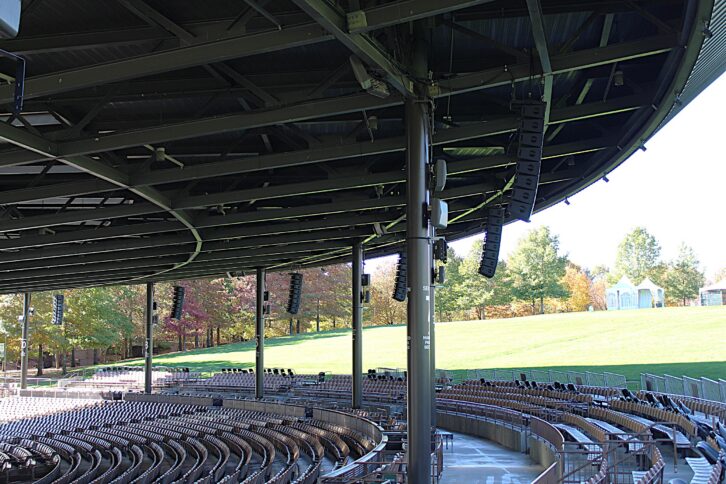
EAW KF210 line array elements have been installed across the lawn at Bethel Woods Center for the Arts, the outdoor amphitheatre on the historic site of the 1969 Woodstock festival, replacing ten two-box loudspeaker clusters. The system comprises 64 elements in eight arrays flown at the lawn’s existing column lines, and was installed by audio, video and IT integrator Metinteractive ahead of the venue’s 20th season.
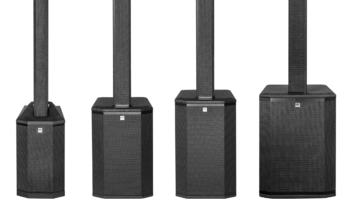
 Each array holds eight KF210 elements, a passive two-way design with 90° x 12° coverage and an IP55 rating, built from polyurea-coated Baltic birch with corrosion-resistant hardware for permanent outdoor use. Each array is paired with an EAW MK2326-WP wide-coverage downfill for the near field. Amplification comes from 17 EAW UXA4416-D amplifiers, each with four channels at 4,000W, primary and secondary Dante, 96kHz floating-point DSP and FIR filters tuned for the KF Series. Signal management runs on a redundant pair of QSC Q-SYS Core 24F processors, with a touchscreen at the rack, feeding a redundant switch fabric.
 Every amplifier also carries an analogue backup alongside its Dante feed, with a pilot tone on the network path. If the network connection fails, the amplifiers switch to analogue automatically, and switch back to Dante when the pilot tone returns. Bethel Woods also took delivery of a separate portable package of 12 EAW RSX208L powered three-way line array modules and four RSX218 dual-18in powered subwoofers, with flybars, flight cases, caster pallets, distribution and cabling. It can be used for outfill, festival stages and events across the venue’s 1,000-acre campus without touching the main system.
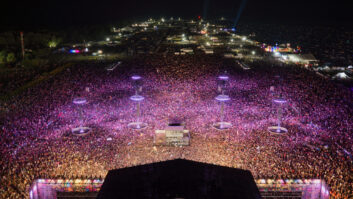
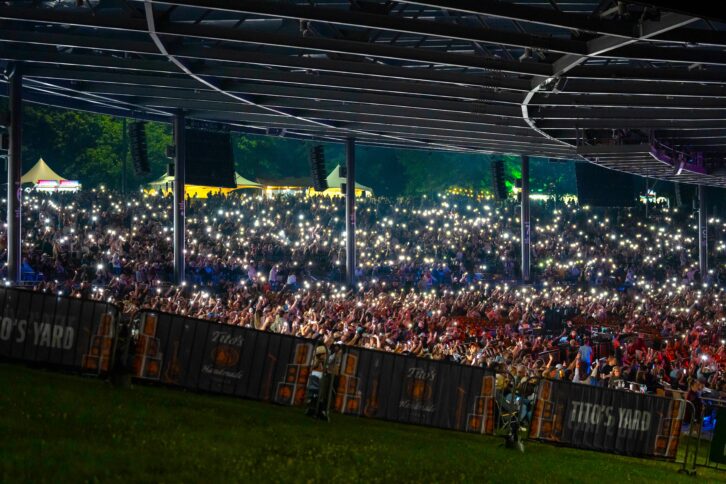
The lawn is a demanding listening environment, with a long throw over a changing grade on an open-air site where humidity alters the response during a night. The Pavilion seats 4,500 under cover, with room for a further 10,500 on the lawn.
 James P. Reilly, senior director of production at Bethel Woods Center for the Arts, said: “The humidity moves on you over the course of a night, and for years we were chasing it. Under certain conditions we couldn’t get any sound pressure on the top quarter of the lawn, and that became an issue. With loudspeaker technology getting exponentially better, we realized we needed to make the transition from point source to line array technology. The difference in sound clarity and the uniform sound pressure across the lawn is now light years ahead of where we were.”
Metinteractive reused the existing wiring, rewired the amplifier rack and built harnesses in advance so the existing NL8 runs landed directly on the new cabinets. The failover was tested repeatedly on site during commissioning.
Richard Gold, who led the technical design for Metinteractive, added: “You don’t get to troubleshoot a network problem in front of 10,500 people. So, we tested it the way it’s going to live, on site, in the rack it runs in. We pulled the network on it over and over trying to make it stumble. Every time it moved to the analog backup and then recovered back to the network feed on its own. If you weren’t watching the front panel you wouldn’t know it happened.”
The venue received the go-ahead for the work three weeks before the first show of its summer season. The upgrade was funded in significant part through New York State arts funding, and the Pavilion was named the top amphitheatre in the US by USA Today in May for the second consecutive year.
You can subscribe to Installation magazine for free here and the daily newsletter here.